Edwards Lifesciences took another step towards becoming a major player in remote heart failure monitoring, after fully acquiring Israeli startup Vectorious Medical Technologies for $497M in cash.
- This move marks the second half of Edwards’ two-phase purchase of Vectorious, having acquired 52% of the company two years ago and now securing the remaining 48% stake.
- It’s also part of a bigger trend with Edwards, which has spent the last couple of years expanding across interventional cardiology.
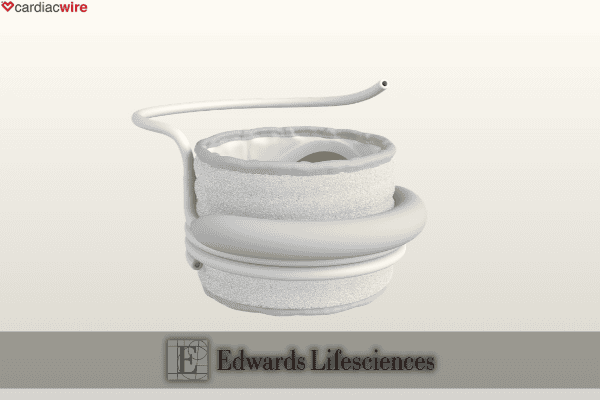
Vectorious’ monitoring device is known as the V-LAP system and it uses a minimally invasive approach to achieve continuous HF monitoring through a tiny, battery-free sensor implanted in the left atrium that wirelessly transmits left atrial pressure data.
- Patients wear an external unit for just one minute daily, which allows pressure data to be automatically transmitted to physicians via cloud connectivity.
- The device is similar to Abbott’s HeartPOD which is also a wireless, implantable device that monitors left atrial pressure.
Edwards’ decision to go all in on Vectorious’ technology is part of a wider trend of acquisitions ever since the company off-loaded its Critical Care business to BD for $4.2B, adding a range of interventional cardiology companies…
- JC Medical for its AVR technologies ($316M).
- JenaValve for its aortic stenosis / regurgitation system (currently under FTC review).
- Endotronix for its pulmonary artery pressure sensor ($1.2B combined with JenaValve).
- Early-stage TMVR company Innovalve Bio Medical for $300M.
- And a $16M investment in surgical mitral valve startup Affluent Medical.
So where does Vectorious’ V-LAP fit into the Edwards acquisition spree? It’s likely that the V-LAP technology will be complementary to Edwards’ earlier Endotronix acquisition which added the FDA-approved Cordella HF sensor to its portfolio.
- The Cordella sensor combines an implanted pulmonary artery sensor, a PA pressure reader, and a digital platform for home-based HF management.
- The combined cost of V-LAP and Cordella (potentially over $1B) puts Edwards deep into the remote HF monitoring game, signaling the company’s interest in prevention.
- This move also falls in line with the shifting paradigm of HF treatment as the HFSA and other cardiology societies begin to see HF as widely preventable rather than inevitable.
The Takeaway
Edwards has yet again shown it isn’t afraid to spend money to make money. Its acquisition of Vectorious marks another step toward either controlling the technology of the HF prevention market, or using it to develop something even more effective.