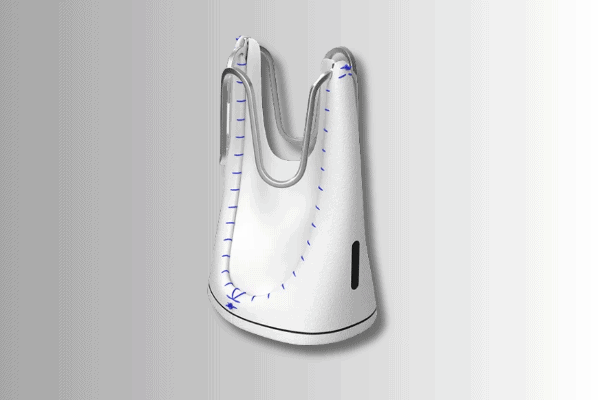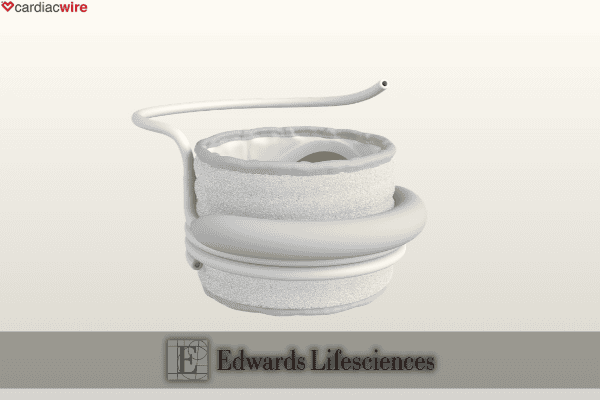
Giving hope to one of the toughest mitral valve patient groups, one-year results from the ENCIRCLE MAC Registry suggest that TMVR with Edwards Lifesciences’ SAPIEN M3 system could help reduce valve dysfunction in select patients with mitral annular calcification (MAC).
- MAC is among the most complex structural heart diseases because the valve is often too calcified for surgery and too anatomically difficult for transcatheter edge-to-edge repair.
- It’s also common, with MAC affecting roughly 23% of older adults and makes mitral valve dysfunction far more likely.
- Enter Edwards’ SAPIEN M3 TMVR system, which gained FDA approval in December of 2025 with both an MR and MAC indication.
Until now, most data on the SAPIEN M3 system stemmed from the ENCRICLE trial which focused on mitral regurgitation rather than calcification.
So to further validate the valve replacement system, Edwards launched the ENCIRCLE MAC Registry, which followed 93 patients with MAC-related mitral disease for one year after they received the SAPIEN M3, finding that…
- Mitral regurgitation grade was reduced to ≤1+ (trace, trivial, or mild) in 98.5% of patients at one year.
- By the one year mark, 87.7% of patients were NYHA class I/II compared to only 26.9% at baseline.
- Patient KCCQ scores also rose 18.5 points, and 6-minute walk distance improved.
Those are real benefits, but there’s also a reality check – while the trial showed a lower composite rate of death or HF hospitalization rate than predicted (33.6% vs. 45%), that’s still a third of all recipients experiencing negative outcomes.
And that’s because this is a very technically demanding procedure that comes with its own cardiac complications…
- One-year all-cause mortality was 21.1% and mitral valve reintervention came in 11.4% (mostly for paravalvular leak closure).
- Structural complications also occurred in 9% of patients, mostly due to intraprocedural injuries during the technically difficult “encircling” step of the intervention.
In reality, this study is a lesson in patient selection and its limitations.
- For example, more than 70% of screened patients were excluded from treatment.
- About half of those exclusions were due to anatomical reasons.
- This high screen-failure rate is not necessarily a weakness; rather, it’s a reflection of the population’s complexity.
The Takeaway
When it comes to MAC-related mitral valve dysfunction, the situation is already dire for most patients. These fresh results from the ENCIRCLE MAC Registry suggest that some of those patients could still benefit from the SAPIEN M3 valve, at least, for one year post-implant.