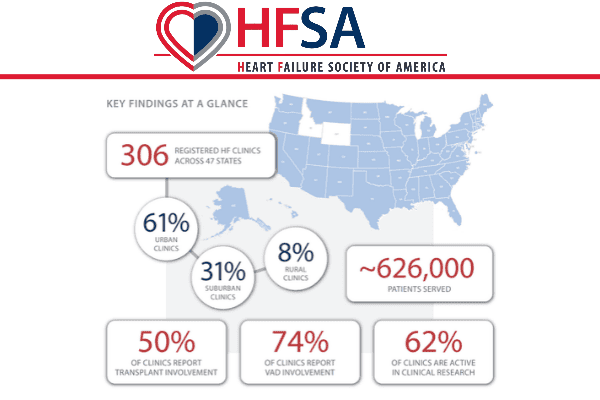
The release of the HFSA’s first ever State of Heart Failure Clinics report revealed just how complex but unevenly distributed heart failure is – unfortunately that means the HF clinics aren’t where the HF patients most in need are.
- HF currently affects about 6.7M Americans and is projected to hit 11.4M by 2050, with annual health system costs reaching $70B by 2030.
- That makes HF the fastest-growing cardiovascular condition in the U.S., yet this HFSA report is the first to ever map out clinic density.
With a focus on geography and patient populations, the report cataloged 306 HF programs across 47 states that together serve an estimated 626k patients. HFSA also estimates that 2.8k additional clinics exist in the U.S. beyond the data they examined.
- When broken down by institutional type, 48% of HF programs were academic, 22% were tertiary centers, and 27% were community based.
Despite those robust numbers, mapping the clinic locations revealed a serious care gap. Most HF programs were clustered in coastal or Midwestern metro areas and academic centers, while the highest-burden regions were the least covered.
- Specifically, the Southern “stroke belt” states were dramatically underrepresented.
- Mississippi and Arkansas each had only one registered clinic despite 13-14% of their Medicare beneficiaries having HF.
- West Virginia had two registered clinics while also posting the worst 30-day HF readmission rate in the U.S. (21.1% vs 19.4% nationally).
Not to make the bad news sound worse, but the HFSA’s report also underscores just how thin staffing is at many programs.
- Of the 306 programs with reported staffing counts, 26% had only one cardiologist.
- Even worse, 7% of programs reported no dedicated HF cardiologist.
- The cherry on this doom cake? More than two-thirds of cardiologists are over 50, so this cardiovascular care segment could be headed off a retirement cliff.
Is there any hope to be found in this HFSA report? Yes, and it’s especially encouraging for the telehealth crowd.
- Remote care adoption is growing steadily in rural areas and 92% of the tracked HF clinics already offer telehealth.
The Takeaway
The results of this report are unsurprising. Heart failure cardiology is complex, costs a lot to become qualified in, and the people who practice it simply don’t live where the patients are. That said, the HFSA’s initiative to shine light on geographical care gaps is how we start expanding care access.