|
SAPIEN M3 for MAC, HF in Young Adults, and Siemens CVUS Moves
By Viktor Zarev, Virginia Hunt
October 15, 2026
|
|
|

|
|
Together with
|

|
|
|
“The next frontier for TMVR in MAC may, therefore, shift toward identifying patients where valvular replacement would translate into a more meaningful benefit.”
|
|
Safi et al. on the results of the ENCIRCLE MAC Registry
|
|
|
Ol’ Blue Eyes is Back… is the name of my favorite Frank Sinatra album. My eyes are green anyway, but they’re back too – and on the lookout for the best cardiology news every week!
A huge thank you to Virginia for holding down the fort while I was out and thanks for reading,
Viktor (Vik) Zarev, Senior Editor
|
|
|
|
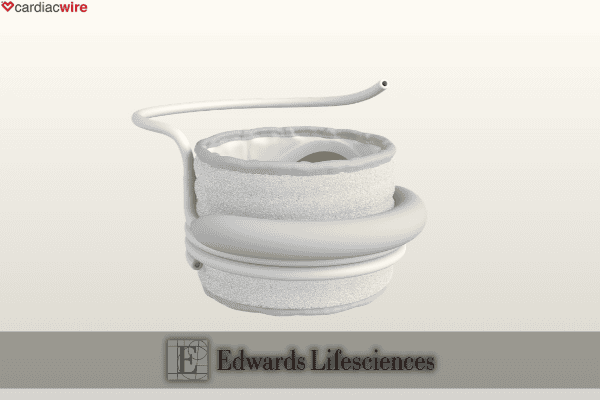
Giving hope to one of the toughest mitral valve patient groups, one-year results from the ENCIRCLE MAC Registry suggest that TMVR with Edwards Lifesciences’ SAPIEN M3 system could help reduce valve dysfunction in select patients with mitral annular calcification (MAC).
- MAC is among the most complex structural heart diseases because the valve is often too calcified for surgery and too anatomically difficult for transcatheter edge-to-edge repair.
- It’s also common, with MAC affecting roughly 23% of older adults and makes mitral valve dysfunction far more likely.
- Enter Edwards’ SAPIEN M3 TMVR system, which gained FDA approval in December of 2025 with both an MR and MAC indication.
Until now, most data on the SAPIEN M3 system stemmed from the ENCRICLE trial which focused on mitral regurgitation rather than calcification.
So to further validate the valve replacement system, Edwards launched the ENCIRCLE MAC Registry, which followed 93 patients with MAC-related mitral disease for one year after they received the SAPIEN M3, finding that…
- Mitral regurgitation grade was reduced to ≤1+ (trace, trivial, or mild) in 98.5% of patients at one year.
- By the one year mark, 87.7% of patients were NYHA class I/II compared to only 26.9% at baseline.
- Patient KCCQ scores also rose 18.5 points, and 6-minute walk distance improved.
Those are real benefits, but there’s also a reality check – while the trial showed a lower composite rate of death or HF hospitalization rate than predicted (33.6% vs. 45%), that’s still a third of all recipients experiencing negative outcomes.
And that’s because this is a very technically demanding procedure that comes with its own cardiac complications…
- One-year all-cause mortality was 21.1% and mitral valve reintervention came in 11.4% (mostly for paravalvular leak closure).
- Structural complications also occurred in 9% of patients, mostly due to intraprocedural injuries during the technically difficult “encircling” step of the intervention.
In reality, this study is a lesson in patient selection and its limitations.
- For example, more than 70% of screened patients were excluded from treatment.
- About half of those exclusions were due to anatomical reasons.
- This high screen-failure rate is not necessarily a weakness; rather, it’s a reflection of the population’s complexity.
The Takeaway
When it comes to MAC-related mitral valve dysfunction, the situation is already dire for most patients. These fresh results from the ENCIRCLE MAC Registry suggest that some of those patients could still benefit from the SAPIEN M3 valve, at least, for one year post-implant.
|
|
State-of-the-Art Cardiac Monitoring at Scale
Cleared for 13 different heart rhythm interpretations, AccurKardia’s AccurECG 2.0 shortens the time from an arrhythmia incident to clinical intervention. Watch here to find out how AccurKardia and Specialized Medical are teaming up to bring the AccurECG 2.0 technology to clinicians across the U.S.
|
|
How Automated MRI Software Transformed Radiology Regional
Radiology Regional recently integrated automated MRI scanning software into their imaging practice imaging. Hear from their team how automating CMR scans streamlined their practice and enhanced patient care.
|
|
Integrating AI for Enhanced Echo
Sometimes it pays dividends to be an early adopter. Find out how the Christ Hospital’s early evaluation of Merge Cardio 12.5 allowed for remote echocardiography measurements, enhanced reporting accuracy, and a seamless user experience, bringing even greater efficiencies and clinical confidence.
|
|
- HF Ascends in Young Adults: Nearly one in four U.S. adults will develop HF, but new data shows that cases are increasingly developing earlier in life. A JCF analysis found that HF mortality rates more than doubled in patients aged 25-44 (+121%) between 2001 and 2020. During that window, mortality rates rose 96% for those aged 45-64 years, greatly exceeding the 22% increase in older adults. While some of the trend may be related to improved diagnostics, the authors note that early development of obesity is likely a larger driver.
- Siemens Specializes in CV: Siemens Healthineers is going all in on cardiovascular imaging as it announced plans to end sales of general ultrasound devices. Popular models of the Acuson general ultrasound system were moved off-market on Monday, the same day the company disclosed plans to home in on intracardiac echocardiography and AI solutions for procedural CV therapies. The decision is also part of a larger Siemens trend that has seen the company increasingly go after the cardiac imaging market with its major cardiac CT ultrasound AI software innovations.
- Handheld Cardiac Implant Reader: BridgeSource Medical received FDA de novo clearance for its SmartRead handheld device that helps quickly identify a patient’s pacemaker or defibrillator brand in the ER. The approval fills an interesting time-saving niche since many ER patients don’t know how to or can’t communicate their device brand which often leads to X-rays and care delays. SmartRead identifies the patient’s implant within 20 seconds by mimicking the communication pings of major manufacturers. The device’s development stems from NIH small business grants.
- Score Triages Heart Transplants: One in five U.S. heart-transplant candidates will die or be delisted before undergoing transplant, but the new U.S. Candidate Risk Score could better prioritize sicker patients. Among 8.2k transplant candidates, the US-CRS showed better discrimination than the current system in predicting six-week mortality (AUC 0.807 vs 0.693, respectively). US-CRS-based rankings also increased the likelihood that the candidate at the top of the list would die within six weeks without the transplant by four percentage points.
- Biomarkers for Acoramidis Response: BridgeBio published a post-hoc analysis of their ATTRibute-CM trial that combined two biomarkers to evaluate the efficacy of their ATTR-CM drug, Acoramidis. Researchers paired an early marker of transthyretin stabilization (serum TTR at day 28) with a later myocardial stress marker (NT-proBNP at month 12) and found that each +0.1 increase in the serum TTR to NT-proBNP ratio led to a 63% lower adjusted risk of death or cardiovascular hospitalization. However, these findings are only exploratory and need validation.
- JenaValve Catheter Recall: More than 360 units of the 23-mm, 25-mm, and 27-mm JenaValve Trilogy delivery catheter have been recalled due to sleeve liner separations that could stunt deployment. Though the FDA’s Class 2 designation warns of only temporary or reversible injury, organizations have been instructed to separate affected devices until a JenaValve representative retrieves them. This recall comes just months after the Trilogy system became the first TAVR device to receive FDA approval for treating aortic regurgitation.
- Gut Microbe Eases Atherosclerosis: A new Nature paper links pentadecanoic acid, a molecule produced by gut bacteria, to lower cholesterol and smaller plaques. The compound appears to alleviate atherosclerosis by inhibiting HMG-CoA reductase, the same enzyme blocked by statins to limit cholesterol production. Mice given pentadecanoic acid saw vastly improved plaque burdens and lipid profiles, suggesting therapeutic potential. Statins may dominate the cholesterol drug market, but they’re not always effective or well tolerated, leaving room for alternatives.
- Sutureless Valve Durability: Corcym presented positive mid-term data from a MANTRA trial sub-analysis of its Perceval Plus sutureless aortic valve, marking the valve’s longest follow-up to date. Specifically, the valve’s FREE anti-calcification tissue and designs were evaluated in 708 patients, and showed a 99.7% freedom from structural valve deterioration three to seven years post-implant. Perceval patients also saw 96.6% freedom from reoperation, and a 3.7% pacemaker rate at 30 days, alongside quality-of-life gains.
- Societies Support TAVR for Regurgitation: The ACC, SCAI, and STS sent a joint letter to CMS saying that they “strongly support” Medicare coverage for TAVR in patients with symptomatic, severe native aortic regurgitation. The move follows JenaValve’s Trilogy system becoming the first TAVR device FDA-approved for AR, with the societies urging a “coverage-with-evidence-development framework” given limited data (only ~1,500 AR cases versus nearly 1M for stenosis). The letter also champions in-person heart team evaluation, and continued quality oversight. CMS expects to share a proposal by March 2027.
- Stent Graft for Complex Aortic Repair: The FDA expanded the approved indications for Gore’s Viabahn VBX balloon-expandable endoprosthesis, making it the first device cleared for both fenestrated and branched endovascular aortic repair (FEVAR and BEVAR). In these procedures, the stent graft bridges the aortic endograft to renal or mesenteric arteries to maintain vessel perfusion. The approval draws on three-year EMBRACE registry data showing high primary patency (97.5% for FEVAR, 94.0% for BEVAR). The device was first FDA-approved for iliac arteries in 2017.
- Apple Owes Masimo Another $184M: A U.S. district court ordered Apple to pay Masimo $184.2M in prejudgment interest on top of the $634M a jury awarded last year, after the Apple Watch was found to infringe a Masimo pulse oximetry patent. The ruling brings Apple’s total to more than $818M. The judge sided with Masimo on owing interest but set the rate based on Masimo’s borrowing costs rather than the steeper 7% it sought.
|
|
Most Health Systems Have Deployed AI. Few Have Scaled It.
75% of health systems have deployed GenAI, yet only 4% report scaled implementation with measurable outcomes (Becker’s 2026). Cardiology shows the difference: HCM diagnosis in about three months versus 2 to 5 years, and pre discharge ILR placements up from 3 to 51. Join Viz.ai CMO Tim Showalter, MD on October 22 to hear what it takes. Register now.
|
|
Canon’s 30 Years of Caring
For over 30 years, Canon has helped advance pediatric interventional cardiology through innovation and a commitment to better care. Learn more about how and why modern pediatric cardiac angiography came to be from one of its founding members, Dr. John P. Cheatham.
|
|
- ECG Analysis That Fits Your Device — Not the Other Way Around: Building a cardiac-monitoring product? ECG software should fit the application, whether it runs on a compact device or a server-based platform. Explore how Monebo works with developers to configure ECG analysis for different hardware, workflows, and integration needs.
- ALL‑RISE Trial Results Are In: The CathWorks FFRangio™ system met noninferiority to wire-based physiology for MACE at one year with statistically significant improvement in resource utilization and reduced procedure time. CathWorks FFRangio™ system is the new standard in coronary physiology. See the ALL-RISE data. The information provided by the CathWorks FFRangio™ system is intended to be used by a qualified clinician in conjunction with the patient’s clinical history, symptoms, and other diagnostic tests, as well as the clinician’s professional evaluation. Source: Fearon et al. NEJM 2026. doi: 10.1056/NEJMoa2600949
- Making the Leap to Outsource Post-Processing: Interested in how to outsource cardiac image post-processing, but not sure where to start? PIA walks you through how to assess and compare vendors, understand pricing models and payment options, and outline your requirements to identify vendors who meet your clinical needs.
- The EP-Heart Failure Collaborative Model: Cardiac contractility modulation therapy can significantly benefit heart failure patients who don’t receive CRT, with no extra training needed for EPs. Hear how Daniel A. Steinhaus, MD and Timothy J. Fendler, MD combined their HF and EP programs to better identify and serve the patients who need CCM.
- Pulmonary Hypertension Detection With a Single Echo Clip: Pulmonary hypertension is often diagnosed late, when irreversible vascular remodelling has already occurred. That’s changing, however, with Us2.ai’s spatiotemporal transformer technology that can process apical four-chamber echo and accurately detects pulmonary hypertension far beyond the single-view echocardiographic benchmark.
- VASCADE MVP® XL Vascular Closure System: Sometimes EP procedures call for a venous vascular closure system that is simply bigger. Haemonetics’ VASCADE MVP XL closure system comes with 58% more collagen and a 9% larger disc compared to the VASCADE MVP system as well as an expanded indication for utilizing 10-14F inner diameter sheaths.
- A Cardiovascular Ultrasound Platform You Can Trust: Being able to provide premium diagnostic information for your pediatric patients every day, all day, is vital. Find out why cardiac imagers trust Fujifilm’s Lisendo 880, and how its premium imaging quality, efficiency tools, and reliability you can trust, have helped change workflows for clinicians and technologists alike.
- The Benefits of Cardiovascular Structured Reporting: Cardiovascular imaging’s growing demand means providers need structured reporting to manage their clinical workflows. Discover why Optum’s structured reports allow for more automated EHR and modality data while helping standardize clinical workflows.
- How to Operationalize and Scale a New CV Service Line: Advances in AI, imaging, and coronary CT are creating new opportunities for cardiovascular care. Explore this Frost & Sullivan Executive Brief for the key things to consider when establishing a coronary plaque service line—from choosing your delivery model to integrating AI cardiovascular imaging workflows and capturing reimbursement value.
|
|
|
|
|