|
Edwards’ Autus Approval, Statin Surveillance, and CV Nutrition
By Viktor Zarev, Virginia Hunt
October 5, 2026
|
|
|

|
|
Together with
|

|
|
|
“I wish people understood what physicians are up against when we’re trying to take care of them. They hate “Physician Billing.” That implies physicians have something to do with billing. That’s intentional on behalf of insurance companies. They hate us and they hate you.”
|
|
Matthew Zirwas, MD on the results of a Medical Economics report.
|
|
|
It seems like we’re continuing to see an exponential boom in innovation across the cardiology MedTech world. One example of that is my recently published interview with Dr. Robert Burke and Scott Edwards about all of the big updates Siemens’ ACUSON cardiovascular ultrasound platform saw this year. You can watch that here.
Another example is the days-old approval of Edwards’ Autus valve, which is sure to spur even more innovation on the structural heart side of things.
As always, thanks for reading,
Vik
|
|
|
|
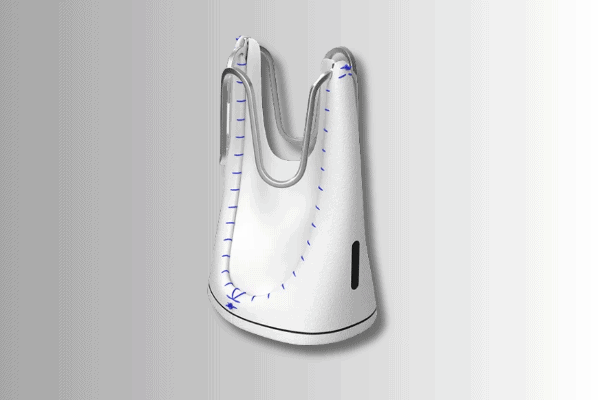
Children born with congenital pulmonary valve disease no longer need repeat surgeries throughout childhood with the FDA approval of Edwards Lifesciences’ Autus Size-Adjustable Valve.
- The two congenital pulmonary valve conditions that lead to intervention are pulmonary valve atresia and stenosis (roughly 4.2k babies annually).
- Current treatments include medications, catheter interventions like balloon valvoplasty, or surgical valve replacement.
- While the replacement is the most effective for stenosis, multiple invasive surgeries are needed to implant larger valves as a child’s heart grows.
Enter the Autus Valve. Originally developed by Autus Valve Technologies (which Edwards acquired for a crisp $128.9M), the Autus Size-Adjustable Valve does what it says on the box – its size changes with the patient’s heart.
- The valve can be implanted with a diameter as small as ~13mm for a toddler and then expanded incrementally over time to 22mm (adult pulmonary valve size).
- Instead of surgical intervention to resize the valve, Autus can be widened using a transcatheter balloon.
- That means pediatric patients can avoid the repeat surgeries needed to keep them alive.
Autus also has a durability design feature for preventing reoperation — polymeric leaflets.
- Due to the hemodynamic stress and calcium metabolism of a growing child, animal-tissue-based valve leaflets harden and degrade faster in children.
- Thus, Autus’ synthetic leaflets are meant to resist that calcification.
That makes this the first ever FDA approval of polymeric leaflet material for any indication, so Autus could serve as a proof of concept for the broader valve field.
- It’s also the first pediatric approval to emerge from the FDA’s Total Product Life Cycle Advisory Program.
Like many FDA approvals, Autus got the green light based on its pivotal trial that tested the valve on 62 pediatric patients.
- 100% of patients were free from device-related complications through 30 days and no reinterventions were needed through six months.
- Next, patients will be followed for 10 years, which matters given how limited the data on a valve like this is.
The Takeaway
Congenital pulmonary valve diseases are a grim proposition for a child to grow-up with, especially with the challenges of continuous reoperation. Edwards’ Autus Size-Adjustable Valve now offers an alternative to those challenges and a chance at normalcy for the children receiving it.
|
|
The EP-Heart Failure Collaborative Model
Cardiac contractility modulation therapy can significantly benefit heart failure patients who don’t receive CRT, with no extra training needed for EPs. Hear how Daniel A. Steinhaus, MD and Timothy J. Fendler, MD combined their HF and EP programs to better identify and serve the patients who need CCM.
|
|
Integrating AI for Enhanced Echo
Sometimes it pays dividends to be an early adopter. Find out how the Christ Hospital’s early evaluation of Merge Cardio 12.5 allowed for remote echocardiography measurements, enhanced reporting accuracy, and a seamless user experience, bringing even greater efficiencies and clinical confidence.
|
|
Canon’s 30 Years of Caring
For over 30 years, Canon has helped advance pediatric interventional cardiology through innovation and a commitment to better care. Learn more about how and why modern pediatric cardiac angiography came to be from one of its founding members, Dr. John P. Cheatham.
|
|
- Missing Statin Surveillance: The AHA and ACC advise regular cholesterol checks for patients taking statins to ensure adherence and efficacy, but a Motive study revealed these reviews may not be happening. Among 111k primary care visits, clinicians skipped recommended cholesterol checks for patients taking statins 17% of the time. That number was even higher in many Western states, with Wyoming having the highest rate of missed tests at 32%. With recently increased statin eligibility, the demand for cholesterol surveillance is only growing.
- ACC’s New Nutrition Advice: The ACC is breaking through the noise of nutrition trends and diet fads to clarify what a heart-healthy diet really is in its new scientific statement. Some advice has stayed the same, like strong recommendations for the Mediterranean diet and against ultraprocessed foods. However, the ACC also doubled down on the importance of consistent dietary patterns over micronutrients and macros. Plus, the organization pushed back on some recommendations from HHS’s 2025-2030 Dietary Guidelines regarding increased protein intake.
- Global HF Growth: As of 2023, global HF burden reached an estimated 56M people, more than double 1990’s 25M cases. A new JAMA Cardiology article looked into the “why,” finding that, while aging populations were largely associated with the increase, drivers of HF differed around the world. Rheumatic heart disease was the top cause throughout much of Asia and Africa, while alcohol use prompted most European and Caribbean cases. The data emphasizes just how much of HF development is preventable, especially for aging adults.
- CKM Compounds Heart Failure Risk: Adding to the mounting evidence behind the new cardiovascular-kidney-metabolic continuum, new research suggests CKM is the norm for HF patients. A cohort study of 725k U.S. patients hospitalized for HF found that 71.9% had two or more overlapping CKM conditions with less than 10% having just HF. Increasing CKM burden was also independently tied to greater in-hospital mortality, postdischarge death, and readmission. Notably, the prognostic impact of a patient’s CKM status was strongest in HFrEF and weakest in HFpEF.
- FDA Upsizes Camzyos Uses: Traditional medications like calcium channel blockers don’t work consistently for adolescents with obstructive hypertrophic cardiomyopathy, forcing many patients to utilize more invasive options. Now, thanks to the FDA’s expanded indication for Bristol Myers Squibb’s Camzyos (mavacamten), pediatric patients with oHCM have a new treatment option. The approval comes on the heels of encouraging results from the Phase 3 SCOUT-HCM trial that showed the drug is safe and effective for children 12-18 years old.
- A Consumer CVD Prevention Platform: Preventive health start-up Hale launched with the mission to make earlier heart-disease prevention more accessible. Hale serves as a digital platform that coordinates CAC CT scans, blood testing, and physician-reviewed results through independent clinical partners. That allows Hale to pair calcium results with advanced markers like Lp(a) and ApoB, to help facilitate next steps and monitoring, a model that follows the new AHA guidelines for earlier, personalized CV risk assessment. Hale’s services range from $129 to $399 in price, reflecting their consumer-focused strategy.
- No Benefit From No-Touch Harvesting: When it comes to CABG, preserving perivascular tissue doesn’t seem to make a big difference. A 7-year follow-up of the SWEDEGRAFT trial found that no-touch saphenous vein harvesting did not reduce long-term clinical events after coronary bypass surgery. Researchers compared the no-touch method to conventional graft harvesting in 900 patients and found that the composite of death, myocardial infarction, or repeat revascularization was nearly identical (19.8% no-touch vs. 20.4% conventional), with no difference in individual outcomes either.
- Renal Denervation’s New Codes: The AMA’s CPT Editorial Panel created two new Category I CPT codes for renal denervation (RDN) for treating uncontrolled high blood pressure. The new codes are expected to take effect January 1, 2028 and unlike temporary Category III codes, these standardized codes establish a clearer pathway for physician reimbursement, which usually drives wider adoption. RDN devices first gained FDA approval in 2023 but were hampered by a lack of reimbursement options. These Category I codes follow the Medicare national coverage finalized in October 2025.
- Cardiac Rehab at Home: Unsurprisingly, people with heart conditions prefer cardiac rehab at home. A Vivalink survey of more than 150 U.S. adults with cardiac conditions found that 79% of patients would participate in cardiac rehab, and 68% preferred a primarily home-based or hybrid approach. However, like much of American healthcare, insurance coverage ranked as the top concern (58%), with 60% unwilling to pay out of pocket.
- Moving Imaging to the Cloud: Northeast Georgia Medical Center went live with Sectra One Cloud, which is Sectra’s cloud-based enterprise imaging solution. The new integration initially deployed modules for radiology, breast imaging, and cardiology. NGMC’s logic is that by bringing multiple specialties into a single platform, clinicians at different sites can consult on the same case rather than working from separate systems. Under a five-year contract, the hospital expects around 850,000 annual imaging exams, with Sectra managing all system operation, maintenance.
- Blood Test to Spare Biopsies: The current method for testing if a heart transplant is going well is taking a biopsy and checking for cellular rejection. That might be changing after a prospective study validated HEARTBiT, a transcriptomic biomarker for detecting cellular rejection post-heart transplant. Across 336 visits from 117 recipients, HEARTBiT detected cell rejection with an AUC of 0.78, with scores detecting rejection weeks before biopsy-confirmed rejection. While that AUC is on the line, the minimally invasive test could help spare more than half of patients from biopsies.
|
|
PIA’s Post-Processing Solution
Advanced cardiac imaging often calls for a time-consuming post-processing step, requiring costly software, hardware, and training. See how PIA provides this post-processing at lower cost, improved consistency, and greater efficiency.
|
|
Circadian Rhythms Revolutionize Cardiac Monitoring
Understanding a patient’s natural circadian rhythms can reveal deeper insights during cardiac monitoring. Find out how Monebo’s monitoring approach provides a visual representation of heart rate, cardiac muscle relaxation, and QT-RR throughout the circadian cycle.
|
|
ALL‑RISE Trial Results Are In
The CathWorks FFRangio™ system met noninferiority to wire-based physiology for MACE at one year with statistically significant improvement in resource utilization and reduced procedure time. CathWorks FFRangio™ system is the new standard in coronary physiology. See the ALL-RISE data.
The information provided by the CathWorks FFRangio™ system is intended to be used by a qualified clinician in conjunction with the patient’s clinical history, symptoms, and other diagnostic tests, as well as the clinician’s professional evaluation. Source: Fearon et al. NEJM 2026. doi: 10.1056/NEJMoa2600949
|
|
- Most Health Systems Have Deployed AI. Few Have Scaled It. 75% of health systems have deployed GenAI, yet only 4% report scaled implementation with measurable outcomes (Becker’s 2026). Cardiology shows the difference: HCM diagnosis in about three months versus 2 to 5 years, and pre discharge ILR placements up from 3 to 51. Join Viz.ai CMO Tim Showalter, MD on October 22 to hear what it takes. Register now.
- How to Operationalize and Scale a New CV Service Line: Advances in AI, imaging, and coronary CT are creating new opportunities for cardiovascular care. Explore this Frost & Sullivan Executive Brief for the key things to consider when establishing a coronary plaque service line—from choosing your delivery model to integrating AI cardiovascular imaging workflows and capturing reimbursement value.
- From Fetal to Adult Cardiovascular Ultrasound: Continuity of care is critical when it comes to a patient’s cardiovascular health. That’s why cardiologists across America are picking Fujifilm’s Lisendo 880 cardiovascular ultrasound for its versatility and precise imaging starting at a patient’s fetal development to adulthood.
- Pulmonary Hypertension Detection With a Single Echo Clip: Pulmonary hypertension is often diagnosed late, when irreversible vascular remodelling has already occurred. That’s changing, however, with Us2.ai’s spatiotemporal transformer technology that can process apical four-chamber echo and accurately detects pulmonary hypertension far beyond the single-view echocardiographic benchmark.
- VASCADE MVP® XL Vascular Closure System: Sometimes EP procedures call for a venous vascular closure system that is simply bigger. Haemonetics’ VASCADE MVP XL closure system comes with 58% more collagen and a 9% larger disc compared to the VASCADE MVP system as well as an expanded indication for utilizing 10-14F inner diameter sheaths.
- Change Healthcare and Optum Unite: Change Healthcare and Optum merged five years ago to advance a more modern, information and technology-enabled health care platform. Read more about how, and why, Change Healthcare became Optum.
- State-of-the-Art Cardiac Monitoring at Scale: Cleared for 13 different heart rhythm interpretations, AccurKardia’s AccurECG 2.0 shortens the time from an arrhythmia incident to clinical intervention. Watch here to find out how AccurKardia and Specialized Medical are teaming up to bring the AccurECG 2.0 technology to clinicians across the U.S.
- How AI Expands the Role of CMR Experts: If you’re an MRI technologist, AI could be the best thing that ever happened to your career. Read here to learn about the benefits of AI for CMR experts and how it can accelerate both your training and career.
|
|
|
|
|