|
10-Year TAVR Data, PA Scope Creep, and Vitamin K for CAC
June 18, 2026
|
|
|

|
|
Together with
|

|
|
|
“I’ve long said that the TAVI trials have been an example of industry-funded trials done well (except that primary endpoint in Partner 3). Now that we have 10-year data, you’d think we’d have answers. But the tension comes in something that affects all device trials: iteration.”
|
|
John Mandrola, MD, on the newly released PARTNER 2 TAVR data.
|
|
|
Tons of TAVR news in today’s issue! Complete with word from the CMS, new ways to detect and treat aortic stenosis, as well as news on when valve interventions go wrong.
Thanks for reading,
Vik
|
|
|
Surgeries & Interventions
|
|
|
|
|
|
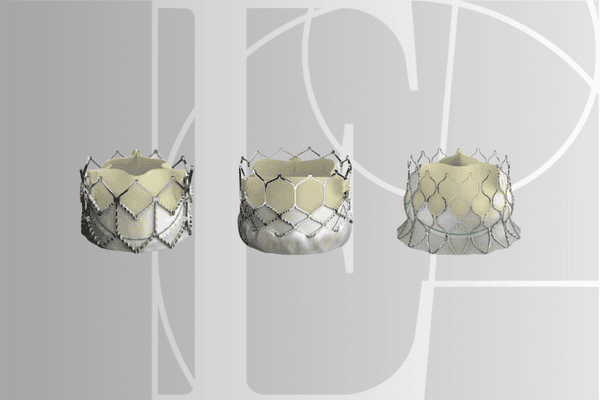
TAVR has been among the default therapies for aortic stenosis patients for years now, but new 10-year data from the PARTNER 2A trial and the P2S3i Sapien 3 registry suggests that how long a valve will last depends heavily on the valve’s generation.
- Both PARTNER analyses were published in JACC simultaneously, representing the most complete long-term randomized comparisons of TAVR versus SAVR to date.
- Prior to this 10-year data, TAVR versus SAVR comparisons only came from the NOTION trial which had a small sample size of first-generation self-expanding valves.
To evaluate durability at the 10-year mark, both the PARTNER 2A and P2S3i analyses compared TAVR with SAVR in intermediate risk patients. PARTNER 2A used the older Sapien XT, while P2S3i used the newer Sapien 3.
- When it came to mortality, Sapien XT’s overall 10-year mortality rate was notably higher than SAVR (93.2% vs 85.1%), while Sapien 3’s was very similar to SAVR (83.4% vs 82.3%).
- Sapien XT’s worse outcomes came from 23% of patients undergoing transthoracic TAVR, while transfemoral TAVR led to much closer mortality rates with SAVR (83.9% vs 82.1%).
But the biggest difference between the two datasets came in reinterventions.
- Valve reintervention was substantially higher with Sapien XT versus SAVR at 10 years (6.3% vs 1.6%), driven by restenosis and regurgitation.
- Meanwhile, Sapien 3 10-year reintervention rates were much closer to SAVR (2.0% vs 1.9%).
The outcome gap is likely due to the Sapien 3’s improvements over the XT like a redesigned stent frame, enhanced skirt, and smaller catheters.
However, these results have serious limitations considering the nature of 10-year follow-ups in aging populations.
- For example, more than 90% of the patients from the start of each study were deceased at 10 years.
- Reintervention and echo data remained incomplete for patients who didn’t re-consent beyond 5 years.
The key unanswered question now shifts to lower-risk, younger patients, where lifetime valve management decisions carry far more weight.
- We’ll have 10-year durability data for those patients in the next three years.
The Takeaway
Comparing 10-year Sapien XT and Sapien 3 data to SAVR confirms that Edwards’ valves are getting better at lasting longer. Whether or not that justifies earlier TAVR in younger patients is still up to debate and future results.
|
|
Identify and Treat Cardiovascular Disease
Complex care pathways make getting patients to the next step a challenge. See how Tempus Next, an AI enabled care pathway platform, helps providers identify and reduce under treatment in cardiovascular disease by adding an intelligent layer onto their routinely generated EHR data.
|
|
The Economics of AI-Assisted HF Diagnosis
As sonographer shortages become more common, so too are diagnostic delays and missed opportunities for early heart failure treatment. Find out how task-shifting LVEF assessment to novice operators using AI-assisted ultrasound is both clinically viable and cost-saving.
|
|
PIA Medical Processes It All
Need an analysis like calcium scoring, strain or even FFR? PIA Medical began as a Core Lab and can handle creative cardiac research and clinical trials along with the full breadth of clinical analyses available today.
|
|
- New CMS TAVR Coverage: The CMS proposed changing existing TAVR coverage to include patients with asymptomatic severe aortic stenosis. CMS now plans to drop the Coverage with Evidence Development (CED) requirement for TAVR in symptomatic severe AS, while keeping the CED in place for asymptomatic patients. These changes also come as part of a larger debate on which patients need TAVR and when, with CMS also making recommendations on “heart teams” and what defines a “TAVR operator. ” It’s worth noting this coverage reconsideration was requested by Edwards Lifesciences, the sponsor of EARLY TAVR.
- Valvular Disease Data: Despite all the advancements in valve therapies, we still don’t know how prevalent valvular heart disease is among older adults in the United States. To answer this, researchers sampled 3k people aged 65-85 and examined them with in-home echo, finding that 8.2% had moderate VHD and 18.4% had clinically significant VHD. Extrapolating this data to the U.S. population would mean that at least 4.7M 65-85-year-olds currently have moderate VHD, and 10.6M currently have clinically significant VHD.
- The First A-FLUX Patient: VahatiCor treated the first U.S. patient with its A-FLUX Reducer System for coronary microvascular dysfunction (CMD). This marks the start of the company’s SERRA-I early feasibility study for evaluating A-FLUX’s self-expanding nitinol implant that is designed to influence blood flow through the heart’s smaller vessels. CMD currently affects millions of patients who experience persistent chest pain without coronary blockages, leading cardiology to deprioritize treating the condition. However, studies like this one could help bring CMD to the treatment frontline.
- AccurKardia’s AK-AVS FDA Nod: AccurKardia announced that its AK-AVS aortic valve stenosis screening software has been accepted into the FDA’s Total Product Life Cycle Advisory Program pilot. AK-AVS works by using an ECG-based AI algorithm to support the diagnosis of moderate to severe AS in adult patients 22 years and older. The software now joins AccurKardia’s AK+ Guard hyperkalemia detection software, which was accepted into the TAP pilot in January 2025. This makes AccurKardia one of a small number of companies with multiple Breakthrough-designated devices enrolled in the program.
- PA Scope Creep in the U.K. The expansion of physician assistants in the U.K. has raised concerns about patient safety and the impact on resident doctor training. One survey of 268 cardiology residents who had previously worked with a PA uncovered that 29.1% reported witnessing PAs to be performing cardiology-based procedures like echocardiography and direct current cardioversion. Meanwhile, 12.6% of residents reported working with PAs who performed actions outside of their scope of practice including prescribing or ordering exams with ionizing radiation.
- Heart Rate and MI: Heart rate is a key risk factor after heart attacks, but its relevance in the current reperfusion era is uncertain. To tackle this, researchers conducted a secondary analysis of the ABYSS trial and found that a higher HR increased risk of death, MI, or stroke compared to a lower baseline HR (aOR: 1.55). For patients on β-blockers, interrupting treatment also substantially increased HR and led to worse outcomes regardless of baseline HR.
- Vitamin K for CAC: New research suggests that supplementation with the vitamin K homologue, menaquinone-7, (MK-7) could slow the progression of coronary artery calcification. Among 167 symptomatic patients with elevated CAC scores randomized to receive MK-7 or placebo, CAC scores increased by 69 AU in the placebo group compared to 49 AU for the treatment group at two-year follow-up. However, much larger trials would be needed to confirm the clinical significance of these findings.
- An Upside-Down Valve: A teen heart patient’s family filed a $17M lawsuit against Oregon Health and Science University and one cardiac surgeon after their daughter’s new mitral valve was implanted upside down. The young girl underwent open-heart surgery, but upon completing the procedure, the care team was unable to restart the girl’s heart and used ECMO to keep her alive. She was then transferred to an ICU, where she underwent additional tests and even more surgeries, after which she was transported to Seattle Children’s Hospital, where the upside down valve was found.
- TAVR Troubles in Montana: Benefis Health System of Great Falls, Montana, is facing complaints about the quality of its TAVR program. In a report from Montana Free Press, Benefis’ TAVR program began in 2022, and multiple physicians who saw the program in action are sharing concerns about how treatments were being chosen. One example of the program’s failings saw a 75-year-old heart patient who underwent an unsuccessful TAVR procedure and never fully recovered. As a result, Benefis paused its TAVR program while working to bring in more cardiovascular specialists.
- TAVR-in-TAVR Outcomes: Fresh data published in EuroIntervention suggests that redo TAVR with balloon-expandable valves is both safe and effective. Researchers examined 143 patients who underwent redo-TAVR and received Edwards Sapien 3 valves inside an already failing valve. These replacements were successfully implanted in 95.1% of patients, with a 30-day mortality of 3.5%, stroke rate of 0.7%, and pacemaker rate of 6.4%. The results are timely considering TAVR’s growing popularity in younger patients who will eventually need valve-in-valve replacements.
- Repairing Valves Without Replacement: France’s Cardiawave began the first clinical treatments with Valvosoft, a non-invasive ultrasound technology for severe symptomatic AS. Rather than replacing the valve via TAVR or SAVR, the device uses high-intensity ultrasound pulses to fragment calcifications on the valve leaflets. This restores native valve mobility and improves hemodynamic performance without surgery or implantation. The therapy is intended for patients who can’t undergo or decline conventional replacement. Valvosoft received CE mark approval at the end of 2025.
|
|
A Cardiovascular Ultrasound Platform You Can Trust
Being able to provide premium diagnostic information for your pediatric patients every day, all day, is vital. Find out why cardiac imagers trust Fujifilm’s Lisendo 880, and how its premium imaging quality, efficiency tools, and reliability you can trust, have helped change workflows for clinicians and technologists alike.
|
|
Redefining Cardiac Analytics
More data doesn’t equal deeper insight. There’s a fundamental difference between measuring the timing of heart beats and understanding how the heart recovers electrically after each beat. Monebo is using that distinction to define the next frontier of cardiac analytics.
|
|
Heart Failure Places Enormous Strain on our Healthcare Systems and Patients
There are 3.7 million US patients with HFpEF or HFmrEF, with prevalence only expected to rise. To learn more about the heart failure landscape and Bayer’s commitment to addressing patient unmet need, watch the video here.
|
|
- Circle CVI’s CAD-RADS Rundown: Ever wondered how CAD-RADS enhance the communication of coronary artery disease findings from imaging studies? Check out this guide from Circle Cardiovascular Imaging about the evolution of CAD-RADS and how to incorporate them into your practice.
- How Automated MRI Software Transformed Radiology Regional: Radiology Regional recently integrated automated MRI scanning software into their imaging practice imaging. Hear from their team how automating CMR scans transformed their practice and enhanced patient care.
- CathWorks is now part of Medtronic. The CathWorks FFRangio™ system is the new standard in coronary physiology. Learn more. Source: Fearon WF, Jeremias A, Witberg G, et al. Angiography-Derived Fractional Flow Reserve to Guide PCI. NEJM 2026. doi: 10.1056/NEJMoa2600949
- Merge Cardio 12.5 is Officially Available! From AI-generated echo measurements to upgraded UI and reports, Merge Cardio 12.5 brings a long list of new innovations to the table. Find out more about how Merge Cardio’s latest version streamlines workflows to make your cardiovascular service line more cost-effective and patient-centered.
- State-of-the-Art Cardiac Monitoring at Scale: Cleared for 13 different heart rhythm interpretations, AccurKardia’s AccurECG 2.0 shortens the time from an arrhythmia incident to clinical intervention. Watch here to find out how AccurKardia and Specialized Medical are teaming up to bring the AccurECG 2.0 technology to clinicians across the U.S.
- The Power of AI in Cardiovascular Imaging: Cardiac labs are under more pressure than ever to deliver more with greater speed and precision. Hear from ACUSON Origin customer, Tony Gallagher about how Siemens Healthineers’ cardiovascular ultrasound system is improving exam efficiency and showing positive impact on ROI.
|
|
|
|
|