2025 has been a year of many cardiology trends, with one stand out technology capturing much of the spotlight – transcatheter aortic valves. To keep our valves in a row, Cardiac Wire has compiled a breakdown of the top TAVR makers, movers, shakers, and potential future players.
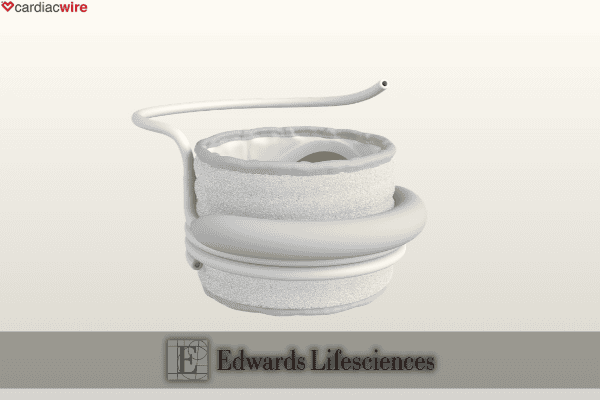
Starting off with the biggest player, Edwards Lifesciences controls about 60-70% of the U.S. TAVR market and has some of the most proven tech in the segment…
- Edwards markets the balloon-expandable SAPIEN platform, which is the longest‑established TAVR system (FDA-approved since 2011).
- Earlier this year, the FDA approved SAPIEN’s use for lower-risk and asymptomatic patients thanks to positive results from the EARLY TAVR trial.
- Shoring up its TAVR pipeline for AR therapy, Edwards also acquired JenaValve and JC Medical in 2024 (although the FTC is now trying to block JenaValve).
Medtronic isn’t far behind and essentially makes up the remainder of the market, with 30-35% of TAVR procedures worldwide using a Medtronic valve.
- The company’s product line includes the CoreValve / Evolut series (self‑expanding nitinol valves).
- Some studies, like SMART, suggest Medtronic’s valves could lead to better outcomes in patients with smaller aortic annuli.
Abbott doesn’t intend to let TAVR stay a two horse race for long, and is working on gaining regulatory approval for its own devices.
- Abbott currently produces the Navitor TAVR system (successor to its older Portico), which is in active clinical trials including the ENVISION pivotal study.
Boston Scientific was a TAVR player up until earlier this year when it quietly discontinued its Acurate product line due to unfavorable trial results and potential stroke risks.
So who is left to challenge Edwards and Medtronic for the TAVR throne?
- Anteris Technologies – Anteris’ balloon-expandable DurAVR THV system looks and works like a human valve (all other TAVRs have three fixed leaflets), and claims calcification benefits.
- JenaValve Technology – Originally Chinese but facing acquisition from Edwards, the JenaValve Trilogy system is undergoing FDA trials for aortic regurgitation and might allow more complex aortic access methods.
- JC Medical – Now also owned by Edwards outside of China, the J‑Valve system is used for both AS/regurgitation and has multiple trials underway.
- Meril Life Sciences – Developer of the Myval TAVR system, India’s first homegrown THV, which launched commercially in India and was CE‑marked in 2019.
The Takeaway
TAVR is certainly here to stay, and while it’s been dominated by two companies for most of its short history, the competition could just be getting started.