

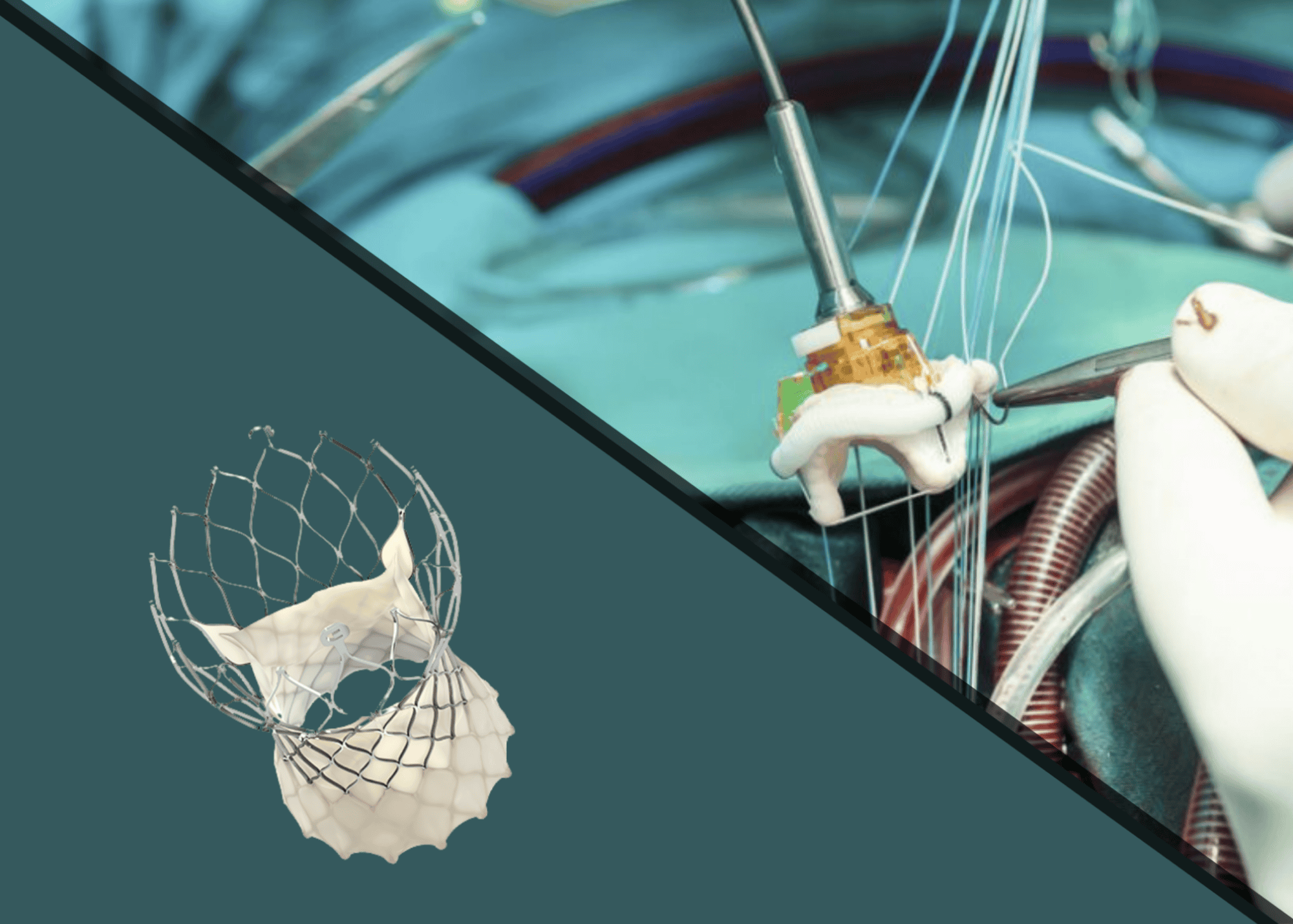
We might need to reconsider the concept of a TAVR-first strategy for low-risk aortic stenosis patients, after extended results from the Evolut Low Risk trial showed that reintervention rates at seven years were considerably higher in TAVR recipients compared to surgical replacement.
- The Evolut Low Risk trial previously established Medtronic’s Evolut TAVR valve as an alternative to surgery in low-risk severe AS patients through its 2-year outcomes.
- However, true long-term durability questions are still being answered as the trial follow-up entered its seventh out of ten years.
As has been the case for each yearly follow-up, the trial examined 1.4k patients (730 TAVR, 684 surgery) who underwent valve replacement from 2016-2019 and revealed similar mortality outcomes with a growing gap in reintervention rate…
- The study’s composite endpoint of all-cause mortality or stroke showed no significant difference at six years (23.3% TAVR vs. 20.4% surgery).
- Despite this, the reintervention rate was significantly higher for TAVR, with a hazard ratio of 1.66 compared to SAVR at six years and far greater than the five year data.
- This prompted researchers to look at the extended seven year data, uncovering that reintervention rates reached 9.8% for TAVR versus 6.0% for surgery.
But what drove this increase in TAVR reinterventions? Researchers found two main causes, aortic regurgitation and valve stenosis, one of which impacted TAVR far more than SAVR.
- Aortic regurgitation requiring reintervention occurred in 5.6% of TAVR versus 1.6% of surgery patients (sHR: 3.39), representing a 3-fold higher risk.
- That said, stenosis-driven reintervention rates were the same between the two (3.6% TAVR v. 3.5% surgery).
These results also play into a bigger story about when it’s appropriate to give a patient a TAVR valve, as Edwards’ EARLY TAVR trial also raised eyebrows when it came to implanting younger, lower risk AS patients with a valve.
- That study found that earlier intervention with a TAVR valve was better than watchful waiting in asymptomatic patients over a 3.8 year follow-up.
- While it was enough to convince the FDA, many researchers and practicing cardiologists advised caution since TAVR’s long-term durability is still unknown.
The Takeaway
The Evolut Low Risk trial’s extended follow-up reveals a troubling durability trend, one which is likely only going to look worse by the study’s tenth year. While that doesn’t invalidate TAVR in low-risk patients, it’s a reminder that these devices aren’t a “one and done” cure and need long term management.


