Cardiac troponin assays might be the gold standard for diagnosing a heart attack in the ER, but a new JAMA study suggests the latest generation of tests could significantly reduce false positives and ultimately, health system burden.
- Myocardial infarction symptoms are a common reason why people go to the ER, accounting for 4% to 6% of total attendances.
- Current guidelines recommend a less than 5-ng/L threshold for cTnT levels to rule out a heart attack and allow for patient discharge when using a fifth generation assay.
- However, this threshold can lead to false positives that burden ERs with unnecessary patient admittances.
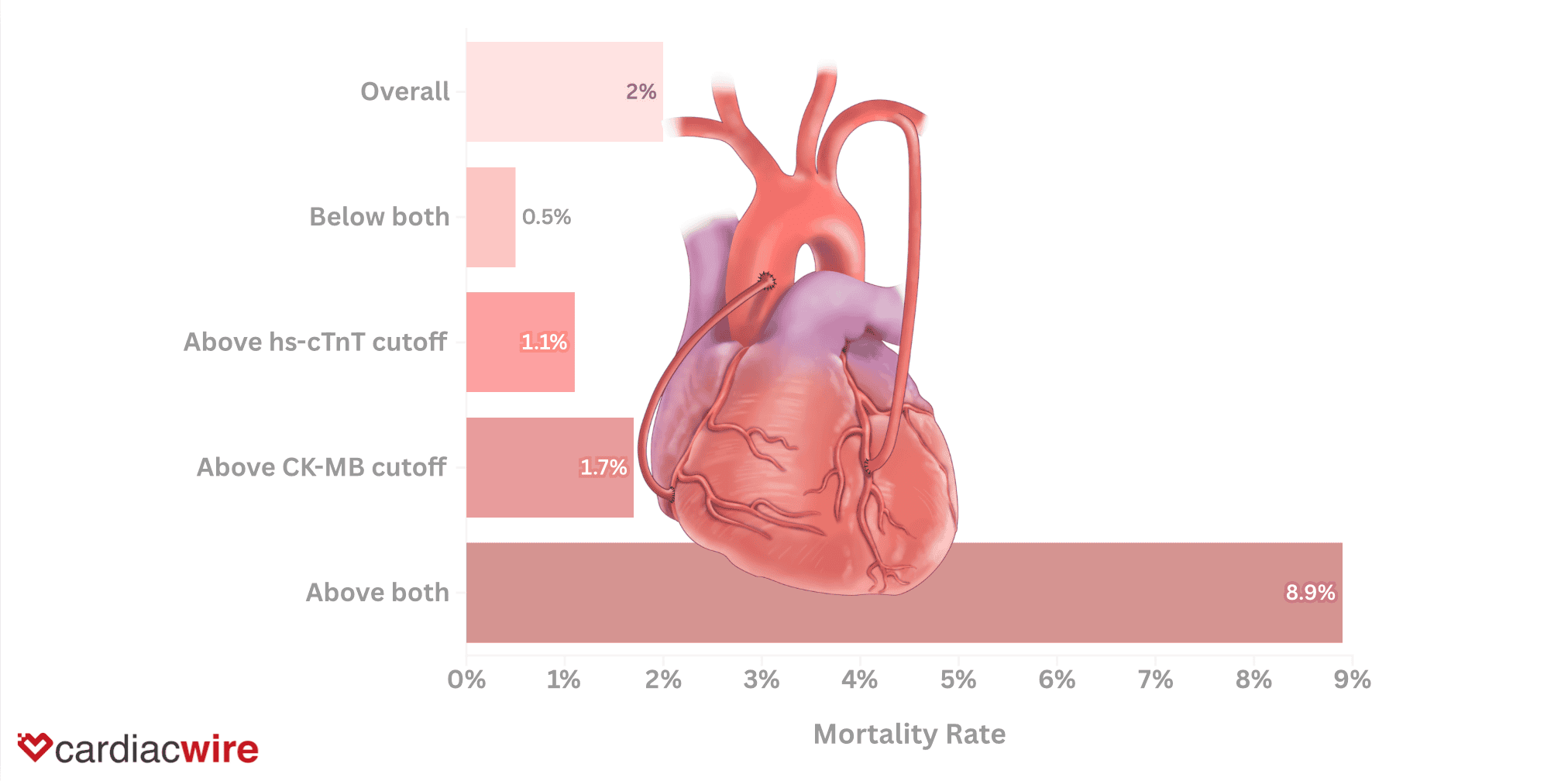
To address this, researchers compared how the newest sixth generation hs-cTnT assay (which used a 13-ng/L cut off for detecting MI) stacks up to the fifth gen assay by using both to evaluate 987 patients presenting to ERs with heart attack symptoms and comparing the results.
- Upon arriving at the ER, 61% had hs-cTnT levels below 13 ng/L.
- As a result, more than double the patients were ruled-out from having an MI using the sixth-gen assay compared to the fifth-gen (41.0% vs. 17.4%).
This led researchers to conclude that the sixth gen hs-cTnT assay could identify more patients as suitable for discharge after a single cardiac troponin measurement.
What this means for ERs, and cardiac emergencies in general, is that a more sensitive hs-cTnT assay could help reduce crowding and systemic burden for health systems.
- For reference, one Canadian study suggests that a single false positive MI hospitalization costs health systems $2,136 on average.
The study also comes just a few weeks after a JACC analysis found that the ratio between hs-cTnI and hs-cTnT could help distinguish between Type 1 and Type 2 MI.
- So there’s a lot more than meets the eye when it comes to cardiac troponins, despite how ubiquitously they’re used to diagnose MI.
The Takeaway
These early assay validation results are a good reminder that as cardiac diagnostics improve, so too will outcomes, especially for an event like a heart attack in which better diagnosis can lead to a lower burden on the healthcare system.