

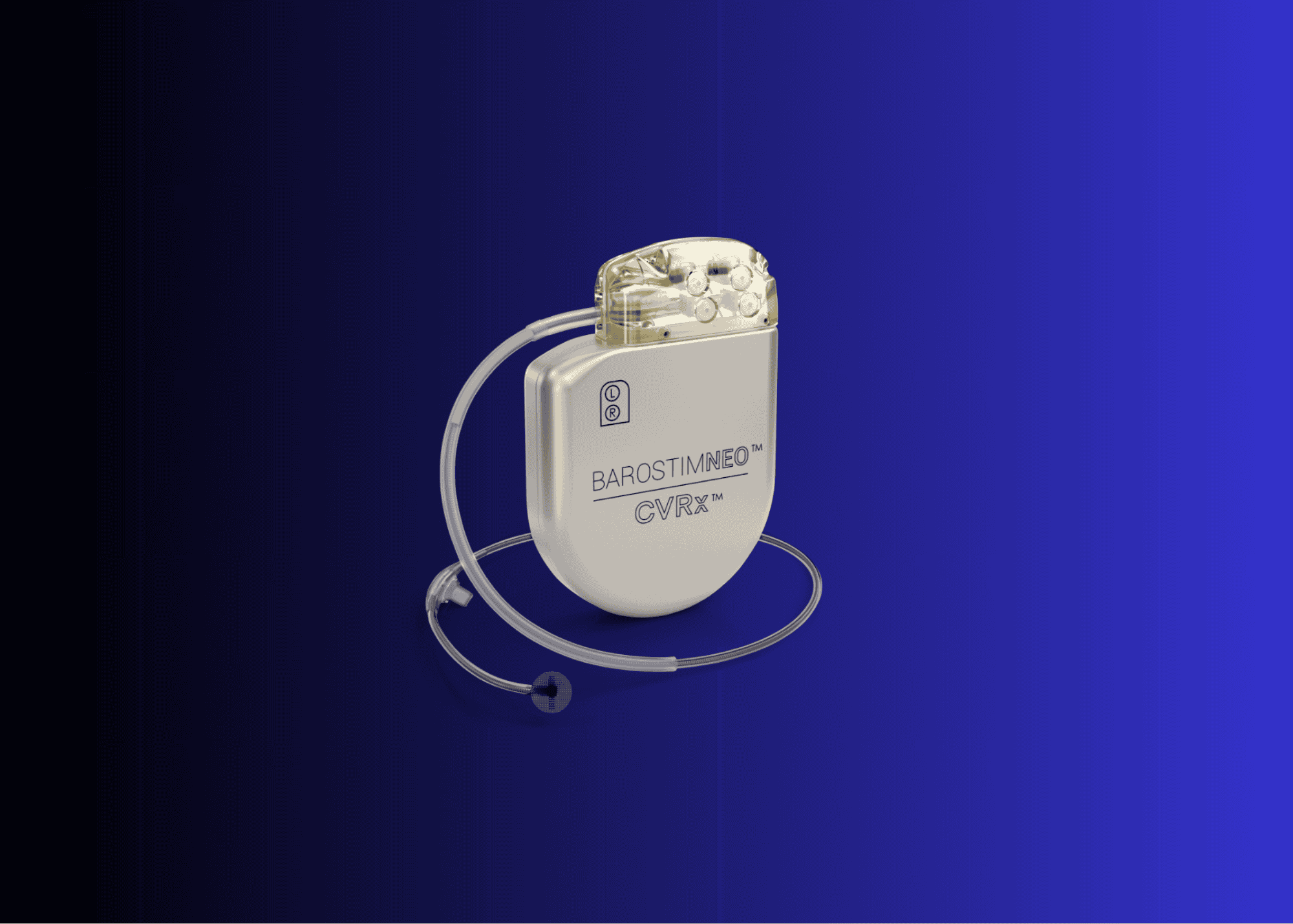
Strong results from two separate studies on CVRx’s Barostim baroreflex activation therapy suggest the technology might offer symptomatic relief even though its mortality benefit is still up in the air.
- Abnormal baroreflex signaling causes neurohormonal issues that drive heart failure progression, so Barostim is intended to help reverse this while combined with GDMT.
- The FDA approved Barostim in 2019 based on the BeAT-HF trial which showed improved quality of life and exercise capacity, but long-term outcomes remained uncertain.
- Barostim is very unique among cardiac therapies, since it’s an implantable neuromodulator that treats HF by stimulating carotid artery baroreceptors.
The first of two Barostim studies discussed at THT 2026, the REBALANCE registry enrolled 435 patients with a low average baseline LVEF, mostly NYHA class III symptoms, and high average NT-proBNP levels to evaluate the nerve therapy’s functional improvements.
- Following the therapy, the average LVEF increased significantly from 26.8% at baseline to 29.9% at 6 months, 30.8% at 1 year, and 33.7% at 2 years.
- Meanwhile 49.8% of patients achieved a clinically meaningful ≥5% LVEF rise.
- NYHA functional class improved significantly with 34% advancing at least one class at 6 months.
In parallel, the separate COSMOS database analysis of 1.5k patients showed year-over-year reductions in HF hospital burdens.
- This manifested as a 14.4% drop in all-cause hospitalizations, 29.1% decrease in HF-related hospitalizations, and 26.8% lower HF-related ED visits.
- An 18.3% increase in all-cause ED visits also occurred but was attributed to the generally poor health of the cohort.
Despite these demonstrated functional and hospitalization benefits, the studies still can’t tell us how much long-term survival is improved by giving patients Barostim.
- Since Barostim is like an add-on therapy that improves symptoms and isn’t intended to directly treat HF, rather manage symptoms, we’ll need more years of data to find out.
The Takeaway
The good news about Barostim? It’s safe and effective for improving an HF patient’s quality of life while reducing burden on the healthcare system. The bad news? It’s still too early to know if this therapy extends lifespan in the patients who receive it.


