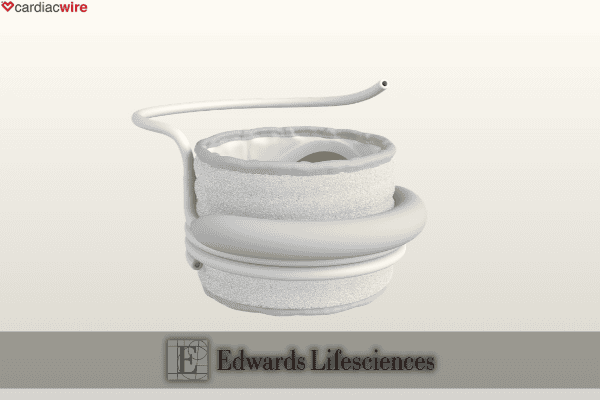
We’re finally starting to get some real-world data on treating tricuspid regurgitation with transcatheter tricuspid valve replacement (TTVR) and a new TVT registry study suggests TTVR outcomes are even better than previously thought.
- Most transcatheter therapies focus on the aortic and mitral valves, but that changed in 2024 when Edwards Lifesciences secured the first and only approval for a TTVR valve.
- However, Edwards’ EVOQUE device is only indicated for improving health status, (i.e. QoL and NYHA class) not for reducing mortality or heart failure hospitalizations.
The TVT Registry analysis followed the 30 day outcomes of 1,034 patients with symptomatic, severe TR who were treated with Edwards’ EVOQUE valve. But it differed in one key way from the TRISCEND II pivotal trial that earned the valve’s approval – patient baseline health.
- The registry’s patients faced several comorbidities like AFib (83.8%), NYHA class III/IV symptoms (~75%), T2D (>33%), and recent HF hospitalization (~50%).
What surprised investigators was that this registry actually showed better results in two key TTVR complications – severe bleeding and pacemaker / CIED rates.
- Severe bleeding rates came in at 7.9%, considerably less than the 10.4% in TRISCEND II.
- In patients without a prior CIED, 15.9% of patients treated with EVOQUE ended up needing one at 30 days, which was also lower than TRISCEND II’s 24.7%.
Meanwhile, the registry’s in-hospital mortality and stroke rates were 2.3% and 0.2%, respectively, and mortality inched up to 3.1% at 30 days post procedure. Although tough to compare, TRISCEND II had a 12.5% mortality rate at one year.
These bleeding and CIED rate reductions are encouraging, but don’t mean EVOQUE is a slam-dunk yet.
- For example, registry studies are observational, they’re not placebo controlled, and they don’t have a comparison group.
- This registry also only uses 30-day data, and patients go on to live years with these devices, so we still have to see what EVOQUE’s real durability looks like.
The Takeaway
The EVOQUE technology has faced push back on its indication and effectiveness, but at least these results reassure that complication rates for bleeding and pacemaker implantation could be lower than expected. We’ll still need to wait and see how this device fares in the long run.