|
HF Clinic Disparities, GLP-1 CV Benefits Explained, and Whole Grains
By Viktor Zarev, Virginia Hunt
September 28, 2026
|
|
|

|
|
Together with
|

|
|
|
“If you force every doctor to see patients at whatever rate Medicare chooses to set, why would a patient elect not to be on Medicare? A doctor who didn’t take Medicare would have no patients to see. And if you can force doctors to see patients at rate X, why not make the rate X/2?”
|
|
Anish Koka, MD on Medicare for All
|
|
|
ICYMI: Huge thank you to Dr. Morales, Kimberly Hatch and Karthick Nalladevan for an incredibly educational webinar on the best practices when creating a cardiac CT program. You can watch the on-demand version here.
Thank you again to all attendees and to all who read Cardiac Wire,
Vik
|
|
|
|
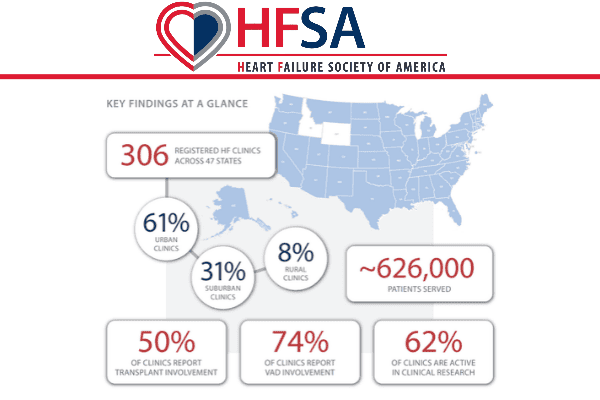
The release of the HFSA’s first ever State of Heart Failure Clinics report revealed just how complex but unevenly distributed heart failure is – unfortunately that means the HF clinics aren’t where the HF patients most in need are.
- HF currently affects about 6.7M Americans and is projected to hit 11.4M by 2050, with annual health system costs reaching $70B by 2030.
- That makes HF the fastest-growing cardiovascular condition in the U.S., yet this HFSA report is the first to ever map out clinic density.
With a focus on geography and patient populations, the report cataloged 306 HF programs across 47 states that together serve an estimated 626k patients. HFSA also estimates that 2.8k additional clinics exist in the U.S. beyond the data they examined.
- When broken down by institutional type, 48% of HF programs were academic, 22% were tertiary centers, and 27% were community based.
Despite those robust numbers, mapping the clinic locations revealed a serious care gap. Most HF programs were clustered in coastal or Midwestern metro areas and academic centers, while the highest-burden regions were the least covered.
- Specifically, the Southern “stroke belt” states were dramatically underrepresented.
- Mississippi and Arkansas each had only one registered clinic despite 13-14% of their Medicare beneficiaries having HF.
- West Virginia had two registered clinics while also posting the worst 30-day HF readmission rate in the U.S. (21.1% vs 19.4% nationally).
Not to make the bad news sound worse, but the HFSA’s report also underscores just how thin staffing is at many programs.
- Of the 306 programs with reported staffing counts, 26% had only one cardiologist.
- Even worse, 7% of programs reported no dedicated HF cardiologist.
- The cherry on this doom cake? More than two-thirds of cardiologists are over 50, so this cardiovascular care segment could be headed off a retirement cliff.
Is there any hope to be found in this HFSA report? Yes, and it’s especially encouraging for the telehealth crowd.
- Remote care adoption is growing steadily in rural areas and 92% of the tracked HF clinics already offer telehealth.
The Takeaway
The results of this report are unsurprising. Heart failure cardiology is complex, costs a lot to become qualified in, and the people who practice it simply don’t live where the patients are. That said, the HFSA’s initiative to shine light on geographical care gaps is how we start expanding care access.
|
|
How Automated MRI Software Transformed Radiology Regional
Radiology Regional recently integrated automated MRI scanning software into their imaging practice imaging. Hear from their team how automating CMR scans streamlined their practice and enhanced patient care.
|
|
State-of-the-Art Cardiac Monitoring at Scale
Cleared for 13 different heart rhythm interpretations, AccurKardia’s AccurECG 2.0 shortens the time from an arrhythmia incident to clinical intervention. Watch here to find out how AccurKardia and Specialized Medical are teaming up to bring the AccurECG 2.0 technology to clinicians across the U.S.
|
|
- Semaglutide’s Cardioprotection Puzzles: Novo’s SELECT trial has given tons of insights on semaglutide’s cardioprotective effects and their surprising breadth. However, a new subanalysis showed the biological effects of weight loss don’t appear to be the main driver of the GLP-1’s heart health benefits. In fact, reductions in weight, inflammation (hsCRP), waist circumference, HbA1c, lipids, and more only appeared to explain an estimated 31% of the risk reduction for MACE. Still, with the wide confidence intervals in mind, researchers can’t be completely sure just how much difference the drug makes on its own.
- Plavix Levels the Playing Field: Aspirin is an accessible antiplatelet after PCI, but its cardioprotective benefits differ between men and women. A new SMART-CHOICE 3 substudy shows Sanofi’s Plavix (clopidogrel) could provide more even benefits. Among 5.5k patients, women’s risk of death, heart attack, or stroke was 4.3% for those randomized to Plavix versus 9.4% for Aspirin. Plavix provided a smaller improvement for men (4.4% vs. 6.0%), but it did close the CV risk gap between women and men (6.7% vs. 5.2%, respectively).
- HRT Heightens Blood Clot Risk: Symptoms of menopause range from insomnia to intense anxiety, which leads many older women to seek relief through hormone therapies — but that may be hurting their hearts. Between 40.2k women with thrombotic disease and 201.2k women without it, women who were taking estrogen had 1.6x higher risk of venous thromboembolism regardless of dosage or duration of treatment. On the other hand, increases in stroke and heart attack risk only became an issue for high-dose HRT lasting more than a year.
- AI Support for CAD Decisions: A JSCAI study showed AI could improve CAD care by using clinical notes to steer optimal treatment. Researchers put 546 CAD case records into two LLMs with either unstructured notes from providers or organized proforma data. The agents agreed with heart teams’ recommendations 75% of the time with the clinicians’ notes and 35% with the summary form. The crucial part was when the AI disagreed: those cases had 3x higher rates of heart attacks, signalling that the AI could help raise red flags about risk.
- Roche’s $2B Cardiometabolic Deal: Roche is dropping $70M upfront and dangling another $1.9B in milestone payments to team up with Atavistik Bio. The aim is to leverage Atavistik’s allosteric drug discovery platform to develop small molecule therapies for cardiovascular, renal, and metabolic diseases. Atavistik will handle early R&D before passing the baton to Roche for further preclinical, clinical, and commercialization efforts.
- Sonus + Medtronic for Maternal Care: Maternal care may be getting more accessible and less expensive thanks to a new partnership between Sonus Microsystems and Medtronic that aims to develop wearable ultrasound patches. While Sonus’ aptly-named Sonus Patch has been in development for monitoring CVD, support from Medtronic’s acute care team will guide the creation of a wearable patch made for catching preeclampsia. Considering about half of U.S. hospitals don’t have maternity wards, home-based care for keeping up with prenatal health could help meet a fast-growing need.
- A Thinner Septal Occluder: A new JAHA study suggests that China-based Hanyu Medical Technology’s novel ReAces atrial septal defect occluder could improve outcomes compared to a traditional Amplatzer-like device. Designed to improve endothelialization and allow future septal puncture, ReAces was compared to the Amplatzer-like standard of care in 126 patients, leading to identical 12-month complete closure (98.4% in both groups), with no severe adverse events except one device dislodgement. Notably, ReAces led to lower migraine disability scores at one month.
- Whole Grains’ for the Heart: Remember those Cheerios commercials about how the whole grain ones are heart healthy? General Mills will certainly be happy with the recent meta-analysis of 87 randomized trials that found higher whole-grain intake improves multiple cardiometabolic risk factors. Across those trials, each 48 g/day increase in whole grain intake was associated with reductions in body weight, waist circumference, total cholesterol, and interleukin-6 with high certainty. Further analysis suggests that the greatest effects were at intakes around 60-100 g/day for most outcomes.
- “Instantaneous” Focal Ablation: Results from Field Medical’s first-in-human study for its FieldForce Ablation System suggest the pulsed field ablation device is safe and effective. FieldForce was tested in 35 patients and acute pulmonary vein isolation was achieved in all, with a median ablation time of 13 minutes with no primary safety events. At the study’s 12-month follow up, 73.9% of patients were free from atrial arrhythmia. Field Medical’s PFA platform is similar to what’s already on the market, but differs in its subsecond, high-voltage waveform.
- ARNIs vs. ARBs for Hypertension: Which is better for hypertension – sacubitril plus valsartan (ARNIs) or angiotensin receptor blockers (ARBs) plus a calcium channel blocker? A 15-trial meta-analysis set out to settle that question and found that the major benefit to ARNIs is BP variability. Compared to ARBs plus a CCB, ARNIs significantly reduced 24-hour blood pressure variability and ambulatory blood pressure across daytime and nighttime. Better yet, their safety profile matched CCBs, and at 200 mg/day it showed fewer serious adverse events and liver abnormalities than ARBs.
- Can a Pacemaker Be Tracked?: Following the kidnapping of a patient with a Bluetooth-enabled pacemaker, a JAMA Cardiology report investigated whether they could be geolocated at a distance. Most manufacturers suggest wireless communication between pacemakers and relay stations extends only about 10 feet. However, many pacemakers also broadcast radio frequency signals, such as Bluetooth Low Energy, for communicating with manufacturer data servers. That means the pacemaker’s position could certainly help find a missing patient, but that comes with its own privacy concerns.
|
|
VASCADE MVP® XL Vascular Closure System
Sometimes EP procedures call for a venous vascular closure system that is simply bigger. Haemonetics’ VASCADE MVP XL closure system comes with 58% more collagen and a 9% larger disc compared to the VASCADE MVP system as well as an expanded indication for utilizing 10-14F inner diameter sheaths.
|
|
Canon’s 30 Years of Caring
For over 30 years, Canon has helped advance pediatric interventional cardiology through innovation and a commitment to better care. Learn more about how and why modern pediatric cardiac angiography came to be from one of its founding members, Dr. John P. Cheatham.
|
|
Merge Cardio 12.5 is Officially Available!
From AI-generated echo measurements to upgraded UI and reports, Merge Cardio 12.5 brings a long list of new innovations to the table. Find out more about how Merge Cardio’s latest version streamlines workflows to make your cardiovascular service line more cost-effective and patient-centered.
|
|
- Beyond the Calcium Score with Circle CVI: The coronary artery calcium score has been the non-invasive gold standard for a quick look at heart disease risk, but it only tells part of the story. Learn more about how Circle Cardiovascular Imaging is using AI-enabled coronary plaque analysis to redefine heart risk beyond what a CAC score can tell us.
- Pulmonary Hypertension Detection With a Single Echo Clip: Pulmonary hypertension is often diagnosed late, when irreversible vascular remodelling has already occurred. That’s changing, however, with Us2.ai’s spatiotemporal transformer technology that can process apical four-chamber echo and accurately detects pulmonary hypertension far beyond the single-view echocardiographic benchmark.
- Bring AI Into Your Cardiac Care Workflow: Viz.ai’s Cardio Suite helps teams flag suspected disease, access cardiac imaging, and coordinate care.
- How Monebo’s AI Genetic Algorithm Makes Technology Smarter: How do you teach a computer to recognize the complex patterns in an electrocardiogram signal? Read about Mondebo’s AI training process and the secret behind their genetic algorithm for ECG analysis.
- Expand Your Cardiac Reporting with CCT and CMR Workflows: Cardiology imaging continues to grow in complexity, and reporting workflows must evolve to keep pace. Check out how Optum’s latest Change Healthcare Cardiology CPACS release enables cardiology teams to now report CCT and CMR studies natively within their software ecosystem.
- Outsourced Post-Processing with PIA: Behind each study is a patient whose care is a top priority. That’s why each PIA out-sourced imaging client is assigned a lead technologist responsible for ensuring study customization while allowing cases to be received 24/7 in a secure and scalable way.
- Fujifilm’s Ultrasound for every Cardiovascular Ultrasound Environment: From academia to clinical diagnostics, versatility in cardiac ultrasound is essential. Discover why clinicians are choosing Fujifilm’s LISENDO 880 for exceptional image quality, comprehensive strain analysis, stress imaging, and innovative Virtual Contrast technology — all while delivering outstanding value.
|
|
|
|
|