|
IVI for PCI, Suspended Lead Suits, and Shockwave’s New IVL
March 12, 2026
|
|
|

|
|
Together with
|

|
|
|
“Yesterday I spent more time helping patients figure out how to pay for their medications than discussing their actual medical concerns. This is how the souls of physicians die. Not all at once, but one paper cut at a time.”
|
|
Andrew J. Sauer, MD
|
|
|
Understanding coronary CTA and plaque morphology has become critical for treating coronary artery disease. Tune in to this exclusive Cardiac Wire webinar on March 24th at 2:00pm ET to hear from Kashif Shaikh, MD, Brittany Weber, MD, PHD, and Udo Hoffman, MD, MPH, about the key findings from Cleerly’s CONFIRM2 registry and how it can improve clinical decision-making while supporting more equitable cardiovascular care.
|
|
|
|
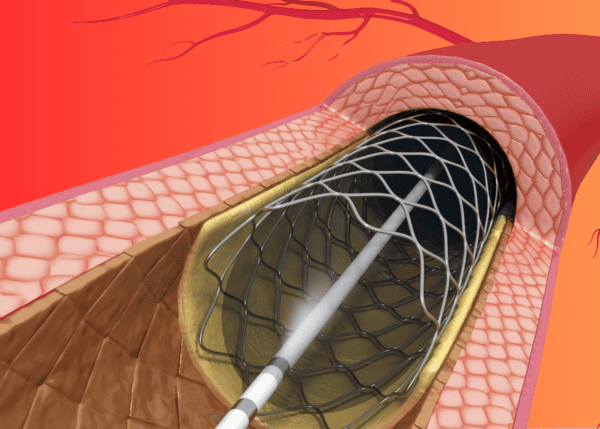
New follow-up data from the RENOVATE-COMPLEX-PCI trial suggests that intravascular imaging continues to provide better clinical outcomes for patients with complex coronary lesions five years after their PCI procedure.
- Intravascular imaging (IVI) refers to catheter-based invasive technologies used to visualize the inside of coronary arteries in real-time.
- The two IVI modalities are intravascular ultrasound and optical coherence tomography, providing cross-sectional images of the vessel wall to guide stent placement.
The RENOVATE-COMPLEX-PCI trial originally randomized 1.6k patients with complex coronary lesions to receive either IVI or angiography guided PCI and found that IVI led to a 36% relative reduction in composite target lesion failure (TLF) compared to angiography after a two year follow-up.
- More specifically, target-vessel MI or cardiac death was reduced by 37%, and cardiac death alone decreased by 53%.
For this latest analysis, researchers followed up after five years and found that…
- The primary TLF endpoint was still significantly lower when intravascular imaging was used to guide PCI (10.5% vs. 14.9%).
- Meanwhile, the composite of cardiac death or target-vessel MI occurred in 7.6% of the imaging group and 10.7% of the angiography group.
Landmark analysis of the data also revealed that most of IVI’s advantages occurred within the first two years following PCI, with no significant difference between the two groups in the years after.
However, due to cost and education, IVI has yet to be widely adopted in the United States despite guidelines giving the methodology a class 1A indication for guiding PCI in chronic and acute coronary syndromes.
- For example, the median cost of hospitalization for single-vessel PCI using IVUS or OCT was approximately $23k from 2016-2018, compared to $19k without these imaging technologies.
- That said, RENOVATE-COMPLEX-PCI’s evidence stands out, since prior studies of IVI PCI did not always show significant decreases in mortality and target vessel MI.
The Takeaway
While the initial two year results of RENOVATE-COMPLEX-PCI were strong, the five year results now provide a robust argument for making intravascular imaging the go-to when it comes to PCI guidance. The even better news is that outcomes like these may be enough to overcome the initial cost of implementing IVI.
|
|
The Benefits of Outsourced Post-Processing
Using an outsourced cardiac image post-processing solution doesn’t have to mean sacrificing control of the results. Discover how PIA’s customizable post-processing workflow can help you get the most out of your images.
|
|
Harnessing the Power of AI to Improve Patient Care
Endeavor Health is one of the first healthcare providers in the Midwest to use AI in the echocardiography lab. Learn how they are harnessing echo AI’s tremendous potential to improve diagnoses in this page from Us2.ai.
|
|
Personalized Plaque Analysis Now With Medicare Coverage
Heartflow’s Plaque Analysis is now reimbursable thanks to Medicare’s new coverage for AI-enabled plaque analysis of eligible patients with coronary artery disease.
|
|
- Suspended Lead Suits Reduce Radiation: Echocardiographers who used Biotronik’s Zero-Gravity suspended lead radiation protection suit were exposed to less radiation than those who wore traditional lead aprons during interventional cardiology procedures. In a JAMA Network Open study, 60% of Zero-Gravity users had no detectable radiation exposure across 95 procedures, compared to a median dose of 11 microSieverts for those wearing lead aprons for 30 procedures. Ceiling-suspended aprons and shields provide radiation protection without adding extra weight for operators.
- Philips Gets Cardiac MRI Software Clearance: The FDA cleared Philips’ SmartHeart software for planning cardiac MRI exams. SmartHeart automates 14 standard and advanced cardiac views in less than 30 seconds, enabling single-click CMR workflow. Philips believes this may help reduce the complexity of cardiac MRI and ultimately increase the technology’s adoption. It’s also worth noting that SmartHeart’s AI engine was trained on 1.2k cardiac MRI datasets.
- Tenaya & Alnylam’s Validation Partnership: Tenaya Therapeutics and Alnylam Pharmaceuticals agreed to collaborate on researching new cardiovascular disease treatments through gene target validation. As a part of the agreement, Tenaya will validate up to 15 gene targets for Alnylam in exchange for an upfront payment of $10M with the potential for a milestone payment schedule that could be as high as $1.13B. The collab seems like a match made in heaven given Alnylam’s experience in RNAi therapies which are most effective when targeting a specific gene.
- Shockwave’s New IVL: Shockwave Medical shared early data in JACC from its new intravascular lithotripsy (IVL) catheter that is designed to deliver treatments to the coronaries twice as fast as its current 1-Hz device. Researchers enrolled 145 patients and treated them with Shockwave’s new 2-Hz IVL platform finding that the procedure achieved a 98.6% procedural success rate. Meanwhile, 97.9% of patients remained free from MACE or target vessel revascularization at 30-days.
- Biome’s Cardio Reporting: Biome Analytics introduced the Biome Strategy Board and Biome Presentation Builder, two software solutions designed to automate reporting and initiative tracking for cardiovascular service lines. With healthcare staff spending an estimated 28 hours per week on administrative tasks, these tools aim to eliminate manual data preparation and formatting. By streamlining reporting workflows and providing real-time accountability, Biome claims the platform allows administrators to shift their focus from clerical documentation to patient outcomes with a focus on value-based care.
- HeartBeam and Mount Sinai’s AI-ECG Collab: HeartBeam announced a strategic collaboration with the Icahn School of Medicine at Mount Sinai to accelerate the joint development of next-generation AI-ECG algorithms. The collaboration will leverage HeartBeam’s ECG platform while marking a significant milestone in the company’s long-term strategy to build an ecosystem around its technology. The duo believes combining HeartBeam’s continuously expanding dataset and Mount Sinai’s clinically annotated 12-lead ECG information will result in a data engine that can support the development of increasingly personalized algorithms.
- Emboline’s Growth Funding: Emboline closed $20M in growth capital to support its upcoming commercial launch and the continued development of its embolic protection technology. The company’s Emboliner Embolic Protection System is designed to provide full cerebral and systemic embolic protection by capturing and removing embolic debris released during transcatheter heart procedures. The funds may also be used to advance Emboline’s aortic embolic protection technologies, including full-body embolic filtration and aortic deflection approaches.
- Cathworks’ ADP vs. Angiography: The first-ever Medicare study of angiography-derived physiology (ADP) suggests that CathWorks FFRangio yields clinical outcomes similar to invasive pressure wire-guided PCI. Analyzing over 4,000 patients from 2019 to 2024, the study found a 2-year MACE rate (death, MI, or repeat revascularization) of 24.8% for ADP versus 23.5% for traditional wires. With ADP utilization growing eightfold in five years, these data support FFRangio as a safe, non-invasive alternative that streamlines clinical workflows without compromising long-term patient safety.
- Codexis’ Cardio siRNA Contract: Codexis entered into an agreement with an unnamed pharmaceutical company to manufacture 50 grams of small interfering RNA (siRNA) to support development of a new cardiovascular therapy. Under the terms of the agreement, Codexis will produce siRNA material using its proprietary ECO Synthesis method to support its partner’s preclinical program. This partnership represents an important demonstration for Codexis’ ability to deliver meaningful quantities of RNA material beyond early research volumes and establishes a potential pathway to further scale-up and manufacturing.
- Adderall and CV Health: While we already know of Adderall’s CV risks, new research suggests that a single 25mg dose of unprescribed amphetamine can trigger significant cardiovascular surges in healthy, drug-naive individuals. Per a Mayo Clinic study, people who took Adderall without a prescription experienced a mean 10mmHg increase in systolic blood pressure, a 10 bpm rise in heart rate, and a 40% jump in plasma norepinephrine. The study also revealed “dramatic” orthostatic instability, nearly doubling the heart rate response upon standing.
- The Return of the Ross: The Ross procedure is experiencing a resurgence, accounting for 6.7% of surgical aortic valve replacements in adults under 60 as of 2023. A new JACC study found that while high-volume centers maintained a low operative mortality (~1%), a small uptick in overall mortality (to 2.5%) occurred due to procedures at low-volume sites where the risk of death is three times higher. Experts cautioned against “casual” Ross surgeons and advocated for concentrating these complex cases in specialized centers to ensure patient safety.
|
|
cvi42’s Real World Results
Consistency of measurements over time is of utmost importance for clinical interpretation and follow-up. Read about how cardiac imagers are using Circle Cardiovascular Imaging’s cvi42 platform to dramatically reduce manual segmentation by up to 60%.
|
|
CMR Access Is Broken — Here’s How to Fix It
Cardiac MRI is one of the most powerful tools for diagnosing heart disease, yet it’s still out of reach for many patients. Download Vista AI’s new infographic to see what’s holding CMR adoption back—and how AI and automation can help make gold-standard imaging more accessible than ever.
|
|
Earlier Detection, Better Outcomes
When it comes to heart disease, early detection is crucial to a patient’s long-term health. Learn more about how Fujifilm helps clinicians achieve that with the Lisendo 880 cardiovascular ultrasound system’s unique solutions that detect early abnormalities seen in heart failure, while offering insight into cardiac functions and groundbreaking hemodynamic analysis.
|
|
- AHA Scientific Sessions Discussion: Heart Failure Treatment Developments and Impact on Women: Women with heart failure with preserved and mildly reduced ejection fraction (HFpEF and HFmrEF, respectively) often present with different symptoms than men, leading to underrecognition. Moreover, the incidence of HFpEF in women is increasing more than in men. Watch Dr. Martha Gulati discuss prevalence and changing treatment options.
- Cracking the Code of ECG Analysis with Monebo’s AI Genetic Algorithm: How do you teach a computer to recognize the complex patterns in an ECG signal? Discover how Monebo found the answer by blending human expertise and a little evolutionary magic in this article that breaks down the advantages of genetic algorithms in ECG analysis.
- Tempus Receives FDA 510(k) Clearance for Tempus ECG-Low EF: Tempus announces the expansion of its Tempus ECG-AI portfolio with Tempus ECG-Low EF, software intended for use to analyze 12-lead ECG recordings and detect signs associated with having a low left ventricular ejection fraction (LVEF less than or equal to 40%) in patients 40 years of age or older at risk of heart failure. It is not intended as a stand-alone diagnostic and positive results may suggest the need for further clinical evaluation. For Full Indications for Use, visit here.
- The Power of AI in Cardiovascular Imaging: Cardiac labs are under more pressure than ever to deliver more with greater speed and precision. Hear from ACUSON Origin customer, Tony Gallagher about how Siemens Healthineers’ cardiovascular ultrasound system is improving exam efficiency and showing positive impact on ROI.
- Why Merge Hemo is the Cardiology Hemodynamics Leader: Thanks to feedback from its customers, Merge Hemo has been named the 2026 Best in KLAS for cardiology hemodynamics for the 14th time. Join Merge for a free virtual discussion on March 18th to hear the factors behind their win and the latest innovations in hemodynamics.
|
|
|
|
|