|
ICDs Prevent SCD in HCM, Novo’s Macrocycle Moves, and HF ACCESS
By Viktor Zarev, Virginia Hunt
September 21, 2026
|
|
|

|
|
Together with
|

|
|
|
“I’m pathologically obsessed with confounding. The mantra that ‘association does not imply causation’ is both obvious and true. So it is remarkable that we keep mistaking the two. Smart people, who should know better, are always assuming that changing some exposure will improve an outcome even when there is no proof they are causally linked.”
|
|
Adam Cifu, MD, on one of statistics’ trickiest conceptual traps.
|
|
|
Sometimes change is a good thing, but if a hospital system hasn’t changed its cardiovascular information system in 30 years, it’s a sign of something even better. I recently had the opportunity to speak to Rob Brayfield from The Christ Hospital Health Network about how and why they’ve used Merge Cardio for the last three decades for their cardiovascular ultrasound needs. You can watch that conversation here.
Another story three decades in the making is today’s ICD study in HCM patients which traces its data to the year Clinton became President. That’s right, ICDs have been saving lives since “For People, For a Change.”
Cheers,
Vik
|
|
|
Cardiovascular Disease Solutions
|
|
|
|
|
|
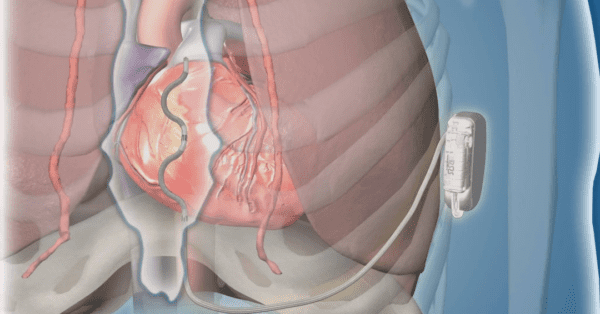
A new Circulation study just confirmed that implanted cardioverter-defibrillators (ICDs) have saved nearly one in six HCM patients, lending massive support to their continued use.
- ICDs have been used in patients with hypertrophic cardiomyopathy to prevent sudden death, and have previously proven lifesaving for many patients.
- However, ICD use and indication for HCM patients stems from relatively small academic centers in specific geographies.
To bring ICD data into the HCM limelight, researchers analyzed 3.3k HCM patients who received ICDs between 1992 and 2024 across 25 centers on six continents with a focus on patient age and why the device was implemented.
- The preliminary number crunching revealed that the average HCM patient was 47 when receiving their ICD with 93% indicated for primary prevention of sudden cardiac death.
- The other 7% were indicated for secondary prevention of SCD (that’s patients who have already survived cardiac arrest or VT).
Then came the effectiveness numbers in these patients and they’re pretty striking over the study’s seven year follow-up.
- Appropriate ICD shocks for ventricular tachyarrhythmia occurred in 16% of patients overall (2.6% per year).
- The rate was far higher in secondary prevention (35%) than primary prevention (15%), as expected.
- Device failure rate came in at only 0.4% (11 primary-prevention patient deaths).
The key insight here is that these devices provide lifelong prevention, not just short-term protection.
- For the average primary prevention HCM patient, it took about 4 years to experience their first ICD shock.
- Nearly half of all patients in the study (47%) required multiple shocks over time.
- Thus, primary-prevention ICD decisions are just as much about lifelong risk as they are near-term SCD.
Now you might be asking, in patients with HCM, wouldn’t surviving SCD just mean trading one death for another? Not quite, and this data helps distinguish HCM from other cardiomyopathies.
- Even after an appropriate shock, 10-year all-cause survival was around 90%.
- That’s very different from other cardiomyopathies where post-shock mortality from heart failure runs high.
- Furthermore, HCM didn’t have many pharmaceutical options in 1992, now the obstructive form has two, so extending long-term survival matters more than ever.
The Takeaway
Hypertrophic cardiomyopathy patients face enough risk as is, and this relatively sizable study supports the broader use of ICDs to prevent SCD, whether or not a patient has faced a cardiac arrest before.
|
|
Circle CVI’s cvi42 v6.5 is Now Live!
Cardiovascular imaging plays a critical role in helping care teams with everything from prevention to procedural planning. That’s why Circle Cardiovascular Imaging released v6.5 of its cvi42 software with features like automated phase offset correction, editable plaque segmentation, and quantitative perfusion to support every aspect of CV imaging workflows.
|
|
Canon’s 30 Years of Caring
For over 30 years, Canon has helped advance pediatric interventional cardiology through innovation and a commitment to better care. Learn more about how and why modern pediatric cardiac angiography came to be from one of its founding members, Dr. John P. Cheatham.
|
|
How AI Expands the Role of CMR Experts
If you’re an MRI technologist, AI could be the best thing that ever happened to your career. Read here to learn about the benefits of AI for CMR experts and how it can accelerate both your training and opportunities.
|
|
- RFK Jr. Names New USPSTF Members: Don’t call it a comeback. After not meeting for over a year and dismissing most of the panel, HHS Secretary Robert F. Kennedy, Jr. announced new members of the USPSTF, the group tasked with developing medical guidance like screening advice. Kennedy’s appointments included a number of medical specialists – including two prominent cardiologists – addressing a frequent criticism that the group was too heavily weighted toward primary care and lacked specialty experience.
- Rethinking Cancer Drugs’ Heart Risk: When used to treat cancer, immune checkpoint inhibitors can drive arterial inflammation and lead to higher MI and stroke risk, but it’s still unclear how this happens. To explore this relationship, researchers imaged 55 cancer patients using FDG-PET/CT before and 24 weeks after starting ICIs, VEGF inhibitors, or both. Surprisingly, arterial inflammation didn’t increase in any of the three groups and immune system changes were low-magnitude. Thus, if ICIs do raise stroke risk, it’s more likely due to endothelial and thrombotic mechanisms than plaque inflammation.
- A Sex-Specific Warning on LAAO: A new sex-specific CLOSURE-AF analysis found that older women with AFib fared worse with LAAO compared to anticoagulation while men did not. Researchers compared outcomes based on sex and DOAC versus LAAO, finding that the procedure significantly increased the composite risk of stroke, embolism, bleeding, or death in women (aHR: 1.66) but not men. That hazard ratio increase stemmed from higher rates of cardiovascular/unexplained death, though the mechanism is unclear.
- An AI Model to Flag Hidden Lp(a): New findings in JACC: Advances show that the FIND Lp(a) machine learning model can help clinicians identify more patients with elevated lipoprotein(a). Trained on medical records from nearly 350k adults with ASCVD from the Family Heart Database, the model flagged patients 2.2x more likely to have high Lp(a) across multiple thresholds. As a result, a model like this could support targeted screening while universal Lp(a) testing gradually reaches practice. It’s worth noting that Novartis funded the analysis.
- Pulse Pressure Worsens Before Menopause: We usually assume that women’s higher pulse pressure after midlife stems from menopause, but a new Hypertension study now challenges that understanding. By analyzing Framingham Heart Study data from over 6.5k women and 3k men, researchers found pulse pressure hit its low and began rising in women’s late 30s, roughly a decade earlier than in men, regardless of menopause timing. The study’s authors now urge clinicians to watch pulse pressure above 60 mmHg in midlife women rather than dismissing borderline readings.
- The Top Pediatric Heart Hospitals: U.S. News & World Report published its 2026-2027 ranking of the best children’s hospitals for cardiology and heart surgery. Texas Children’s Hospital in Houston claimed the No. 1 spot yet again, a position it has held every year since 2019. Children’s Hospital Colorado and Duke Children’s Hospital ranked No. 2 and No. 3, matching their prior-year placements. Choosing from 200 eligible programs, U.S. News’ ranking systems scored these hospitals based on clinical outcomes (heart surgery, transplant, and congenital correction success rates) and care factors like specialized staff, services, and technologies.
- Novo’s $1.4B Pact: Novo and Orbis Medicines inked a deal worth up to $1.4B to develop oral macrocycle drugs for “high-value” cardiometabolic targets. While the two companies have not announced which cardiac indications they’re targeting, a clue could come from the type of drug they’re developing. Macrocycles, as the name suggests, are large ring-shaped molecules, which can disrupt protein structures (like the LDL-C-relevant PCSK9 protein) due to their robust 3D geometry. So, Novo and Orbis might be targeting a cardiometabolic protein mechanism in the future.
- Abbott’s Mini Pacemaker Approval: Bigger isn’t always better, especially when it comes a device that’ll have to be steered through blood vessels into the right ventricle. Last week, Abbott received FDA approval for their 32.5 mm Aveir VR Mini Ventricular leadless pacemaker, which is about the size of a bottle cap and 14% shorter than their standard model. As leadless pacemakers become more common for treating high-risk bradycardia patients, Abbott’s approval follows a trend of companies innovating — and quickly.
- ACCESS to HF Treatment: Getting affordable at-home HF treatment could be becoming easier since CMS expanded its ACCESS program to include HF care. The Advancing Chronic Care with Effective, Scalable Solutions model officially launched in July to incentivize technology companies to develop affordable, measurement-based care for the two-thirds of Medicare patients with chronic conditions. The HF-specific track will start up in Spring 2027 with a focus on remote patient monitoring technology, including wearables and expanded telehealth capabilities.
- Broad Ethnic Categories Mask Risk: A new SALAM registry analysis of 50k patients revealed modifiable CV risk factors for Arab Americans previously underexplored in data from broad ethnic categories, like “Caucasian” or “non-Hispanic white.” Previous data has shown unspecific racial and ethnic definitions often mask wide risk differences, and researchers emphasized the importance of understanding cultural, demographic, and genetic differences as determinants of health. As precision-medicine capabilities grow, these findings emphasize that one-size-fits-all risk assessments and interventions shouldn’t be the norm.
- ViV vs. ViR for TMVR: TMVR is often used to treat high-risk patients, so the more data to inform decisions about when to pick valve-in-valve versus valve-in-ring TMVR, the better. Among 1.9k patients who underwent either ViV or ViR TMVR using Edwards’ SAPIEN valves, both groups had comparable outcomes for 30-day mortality, major bleeding, and stroke risk. Still, a closer look at the data favored ViV for most patients, showing 70% lower odds of valve obstruction and a 49% lower likelihood of acute kidney injury.
|
|
State-of-the-Art Cardiac Monitoring at Scale
Cleared for 13 different heart rhythm interpretations, AccurKardia’s AccurECG 2.0 shortens the time from an arrhythmia incident to clinical intervention. Watch here to find out how AccurKardia and Specialized Medical are teaming up to bring the AccurECG 2.0 technology to clinicians across the U.S.
|
|
VASCADE MVP® XL Vascular Closure System
Sometimes EP procedures call for a venous vascular closure system that is simply bigger. Haemonetics’ VASCADE MVP XL closure system comes with 58% more collagen and a 9% larger disc compared to the VASCADE MVP system as well as an expanded indication for utilizing 10-14F inner diameter sheaths.
|
|
- Smarter STEMI Care With Viz.ai: Reducing false activations and unnecessary transfers helps save critical time and resources for both patients and health systems. Hear from Gregory Means, MD, about his experience using Viz.ai to access EKGs and surface patient history in one place.
- Corbotics and Us2.ai’s End-to-End Automated Echo: There’s a growing demand for cardiac imaging in the face of sonographer shortages and increasing pressure on specialist resources. That’s why Us2.ai and Corbotics are combining autonomous robotic echo acquisition with AI-powered analysis to create an end-to-end automated echocardiography workflow.
- From Fetal to Adult Cardiovascular Ultrasound: Continuity of care is critical when it comes to a patient’s cardiovascular health. That’s why cardiologists across America are picking Fujifilm’s Lisendo 880 cardiovascular ultrasound for its versatility and precise imaging starting at a patient’s fetal development to adulthood.
- Why Merge Hemo is the Cardiology Hemodynamics Leader: Thanks to feedback from its customers, Merge Hemo has been named the 2026 Best in KLAS for cardiology hemodynamics for the 14th time. Watch this on-demand virtual discussion to hear the factors behind their win and the latest innovations in hemodynamics.
- The Benefits of Outsourced Post-Processing: Using an outsourced cardiac image post-processing solution doesn’t have to mean sacrificing control of the results. Discover how PIA’s customizable post-processing workflow can help you get the most out of your images.
- Change Healthcare and Optum Unite: Change Healthcare and Optum merged five years ago to advance a more modern, information and technology-enabled health care platform. Read more about how, and why, Change Healthcare became Optum.
- Telemedicine Isn’t About Technology. It’s About People. With temporary telehealth rules expiring, millions of Medicare patients may lose their ability to see their doctors remotely. Read why Monebo and the Alliance for Connected Care are urging Congress to make telemedicine a permanent part of the healthcare system.
|
|
|
|
|